
 Climate
 Privacy
 Bob Dylan
 Drones
 Data Centers
 AI Governance
 2026 Maine Senate Race
Communities Push Back on Data Centers
Coverage from The Conversation, Houston Public Media, and others
Articles
44
Active Days
76
The Topic
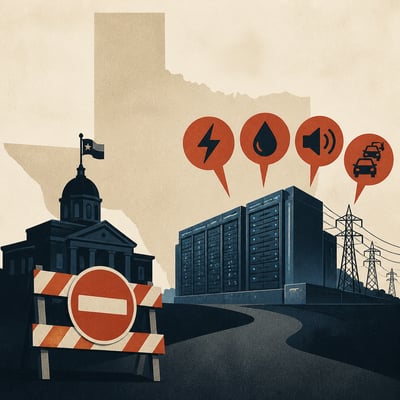
Local governments and residents are pushing to pause, restrict, or more closely review data center projects as concerns grow over noise, water use, electricity costs, grid reliability, and pressure on public infrastructure. Texas is the clearest focal point, with counties and cities pursuing moratoriums, stricter standards, and state intervention while Gov. Greg Abbott calls for developers to bear more of the costs. The disputes are increasingly shaping permitting decisions, political campaigns, and the balance of authority between local and state governments.
First Article: 05/12/26
Latest Article: 07/26/26
Summary
- Hill County approved a one-year pause on data center and power plant construction in unincorporated areas amid plans for as many as eight facilities.
- Lockhart directed staff to draft very strict standards after council members weighed a ban but cited litigation and municipal cost risks.
- Brazoria County called for safeguards for grid reliability, water, energy use, agricultural land, and public infrastructure, along with independent impact assessments.
- Residents and local officials have raised persistent noise and vibration concerns near operating facilities, including a Giga Energy site in Brazoria County.
- Texas officials are debating whether data centers should pay for the electric infrastructure and power costs needed to serve them.
- Local and state authority remains contested, with moratoriums, zoning disputes, lawsuits, and proposed limits on local regulatory powers.
History
The story has shifted from a focus on specific Texas local actions and grid-demand forecasts to a broader dispute over who should pay for data center impacts and how local-state authority will be enforced. The new version also elevates the political stakes by noting that these disputes are now influencing permitting and campaigns.
The story now places greater weight on statewide intervention and operational impacts, with Abbott and regulators pushing costs onto developers while ERCOT’s demand forecast makes future power strain more urgent. It also adds a concrete complaint case near an operating facility, showing the issue is no longer just about proposed projects.
Featured
Timeline: 76 Days
Hover over any logo to see coverage summary, click for full article.