
 AI Governance
 Data Centers
 Drones
 Climate
 Privacy
 Bob Dylan

Drones: Featured Story
Coverage from Hku, Interesting Engineering, and others
HKU Develops Omnidirectional Single-Propeller Drone
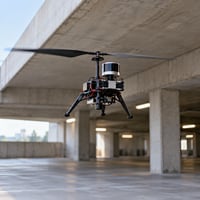
Researchers at the University of Hong Kong developed PULSAR II, a 1.12-kilogram autonomous drone that uses its body rotation and a single LiDAR sensor to scan in all directions. In reported tests, it navigated forests and underground car parks at speeds above 6 meters per second using onboard mapping, planning, and control without GPS or external computing equipment. The results demonstrate a compact approach to sensing and flight control in obstructed environments, though wider applications remain prospective.
If you read one thing
HKU’s account explains how body rotation gives one LiDAR sensor an all-around view and reports the drone’s navigation and collision tests.
Best explainer
This coverage adds a concise account of the single-motor design, onboard control, and measured hover time.
Coverage establishes a working prototype and reported tests in obstructed environments, but does not establish wider operational deployment. The research team says improving localization where there are too few laser-reflecting features remains a task.
The single-motor design uses the drone’s continuous rotation to give one vertically mounted LiDAR sensor a broad view, including above and below the aircraft, and build 3D maps for navigation.
In forest and underground car-park tests, the onboard system mapped, planned paths, avoided obstacles, and controlled flight without GPS or external computing; reported speeds exceeded 6 meters per second.
Collision tests showed stable flight after impacts, and reported measured hover time was 15 minutes and 50 seconds. Search and rescue and other uses are prospective; the team says localization in open spaces with insufficient laser-reflecting features still needs improvement.