
 Climate
 Privacy
 Bob Dylan
 Drones
 Data Centers
 AI Governance
 2026 Maine Senate Race
Army Scales Low-Cost Combat Drones
Coverage from Aol, Business Insider, and others
Articles
24
Active Days
90
The Topic
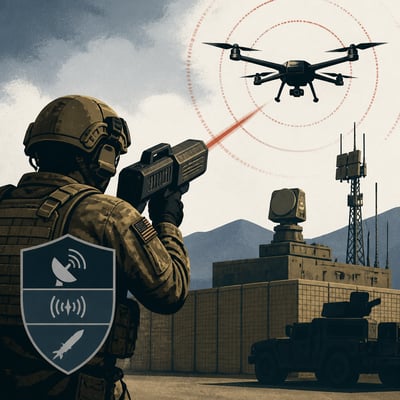
The U.S. Army is expanding the use of inexpensive drones for reconnaissance, attack, breaching, electronic-warfare targeting, and counter-drone missions. Exercises with the 101st Airborne Division and other units emphasize mass, low cost, simple operation, rapid local production, and training through simulators and repeated live flights. The shift could give smaller units more persistent battlefield coverage while reducing exposure of soldiers, but it also creates demands for batteries, operators, logistics, realistic training conditions, and reliable defenses against enemy drones.
First Article: 04/27/26
Latest Article: 07/25/26
Summary
- The 101st Airborne Division used 228 attack drones in a Fort Polk rotation, with roughly 150 built by soldiers.
- Army leaders argue that combat units need inexpensive drones in large quantities rather than a small number of costly systems.
- Soldier-built drones support reconnaissance, attacks on bunkers and electronic-warfare systems, smoke delivery, and breaching operations.
- FPV drone courses use 20 to 30 hours of simulator training before live flight to reduce crashes and speed qualification.
- The Army is testing terminal guidance, automatic target recognition, and one-to-many control to reduce operator workload.
- Counter-drone training includes drone-on-drone interception, electronic jamming, acoustic detection, and operations in difficult weather and fatigue conditions.
- Local manufacturing and 3D printing are being used to produce affordable airframes, spare parts, and mission-specific components.
History
The story now emphasizes that the Army is not just experimenting with cheap drones, but actively building the training, manufacturing, and support systems needed to field them at scale. It also adds clearer evidence that counter-drone defense and sustainment burdens are becoming central constraints.
The story has shifted from general Army counter-drone experimentation to a more concrete scaling effort for low-cost offensive and defensive drones. The new material emphasizes soldier-built systems, mass production, simulator-based FPV training, and autonomy as the Army tries to make drones fieldable in large quantities.
Featured
Timeline: 90 Days
Hover over any logo to see coverage summary, click for full article.