
 Climate
 Privacy
 Bob Dylan
 Drones
 Data Centers
 AI Governance
 2026 Maine Senate Race
South Korea Expands Military Drone Forces
Coverage from The Guardian, The Jerusalem Post, and others
Articles
13
Active Days
24
The Topic
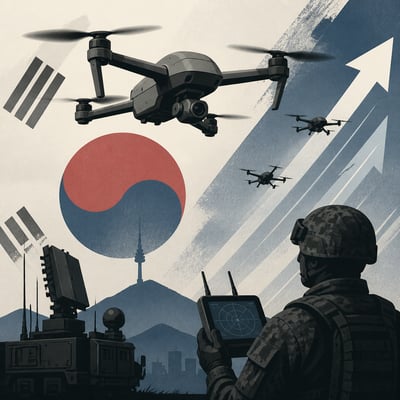
South Korea plans to train roughly 500,000 military personnel to operate drones and distribute larger numbers of commercial, expendable, swarm, and loitering systems across the army, navy, air force, and marines. The program also expands laser and high-power microwave defenses, accelerates domestic procurement, and gives individual services more responsibility for drone operations. The effort is aimed at countering North Korean capabilities, addressing manpower constraints, and applying battlefield lessons from Ukraine and the Middle East, but its scale and feasibility remain uncertain.
First Article: 06/25/26
Latest Article: 07/18/26
Summary
- South Korea intends to make drone operation a standard skill across the army, navy, air force, and marines.
- The military plans about 11,000 training drones in 2026 and a larger force by 2029, although reported totals differ.
- More than 20,000 low-cost expendable combat drones, AI-enabled swarms, and loitering munitions are planned for future deployment.
- Seoul is expanding laser, high-power microwave, and potentially low-cost interceptor drone defenses after the 2022 North Korean incursion.
- Procurement rules are expected to change to speed military adoption of civilian drone technology and reduce reliance on Chinese components.
- Operations are shifting from a centralized drone command toward service-level execution under a reorganized defense headquarters.
History
The update mostly sharpens the framing rather than changing the core plan: South Korea’s drone push is now described as more decentralized, with service-level responsibility and a proposed reorganized defense headquarters. It also adds uncertainty around feasibility and highlights domestic sourcing limits and Middle East battlefield lessons.
The story now adds a more explicit implementation and sourcing dimension: South Korea is not only expanding drone use, but also reorganizing operations, speeding civilian-tech adoption, and constraining procurement to domestic components. It also broadens the counter-drone side by adding laser and high-power microwave defenses tied to North Korean incursions and lessons from Ukraine.
Featured
Timeline: 24 Days
Hover over any logo to see coverage summary, click for full article.