
 Climate
 Privacy
 Bob Dylan
 Drones
 Data Centers
 AI Governance
 2026 Maine Senate Race
Cheap Drones Reshape Air Defense
Coverage from Al Jazeera, Business Insider, and others
Articles
12
Active Days
75
The Topic
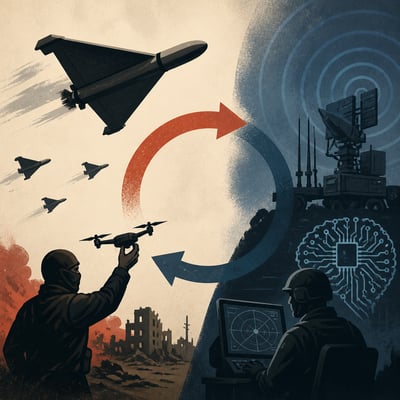
Low-cost drones, especially Shahed-style one-way systems, are being used at scale in Ukraine and the Middle East to strike military targets, air defenses, energy facilities, and shipping routes. Their low production cost can force defenders to spend far more on missiles and conventional systems, prompting Ukraine and NATO to expand interceptor drones, sensors, electronic warfare, and other layered defenses. The central shift is toward affordable systems produced in large numbers, while autonomy, jamming resistance, and human control remain unresolved operational issues.
First Article: 05/15/26
Latest Article: 07/28/26
Summary
- Shahed-136 and related one-way drones are being used in large-scale attacks against military sites, air defenses, energy facilities, and shipping-related infrastructure.
- Ukraine is developing multiple interceptor-drone designs, including FPV, fixed-wing, and longer-endurance aircraft, to defend against Russian Shahed barrages.
- The cost imbalance between inexpensive attack drones and multimillion-dollar air-defense missiles is driving demand for affordable defenses at scale.
- Russia has adapted Iranian Shahed designs as Geran-2 systems and reportedly improved their navigation, propulsion, and mission capabilities.
- Electronic warfare is shaping drone design, increasing interest in jamming-resistant, autonomous, and fiber-optic-controlled systems.
- NATO and other militaries are reconsidering sensors, command structures, industrial capacity, and counter-drone procurement rather than relying mainly on fast jets and expensive missiles.
- Energy facilities, ports, pipelines, power stations, and maritime chokepoints are increasingly treated as vulnerable targets requiring dedicated drone defenses.
History
The story now places greater emphasis on Shahed-136/Geran-2 systems as the core example and expands the defensive response beyond interceptor drones to broader NATO procurement, command, and industrial capacity changes. It also adds more specific vulnerability targets, especially maritime chokepoints and shipping-related infrastructure.
The story now goes beyond battlefield drone exchange to emphasize a broader defense problem: persistent low-cost attacks are forcing NATO and allies to rethink air defense scale, production capacity, and even autonomy rules. It also adds new operational detail on how interception is evolving, especially with multiple Ukraine-built interceptor-drone types and more jam-resistant designs.
Featured
Timeline: 75 Days
Hover over any logo to see coverage summary, click for full article.