
 Climate
 Privacy
 Bob Dylan
 Drones
 Data Centers
 AI Governance
 2026 Maine Senate Race
WaiV Automates Drone Landings at Sea
Coverage from DRONELIFE, DroneDJ, and others
Articles
4
Active Days
63
The Topic
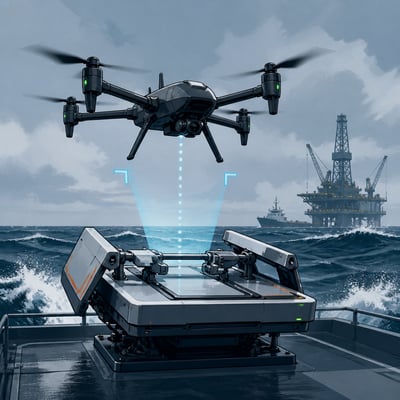
WaiV Robotics is developing and launching an autonomous platform that helps VTOL drones take off, land, and redeploy from moving vessels in challenging sea conditions. The system combines a gyro-stabilized landing pad, sensors, predictive flight guidance, and an automatic locking mechanism, while supporting multiple drone configurations without aircraft modifications. The technology is aimed at offshore inspection, energy, surveillance, search-and-rescue, and government missions where unreliable recovery and the need for highly skilled pilots have limited maritime drone use.
First Article: 05/05/26
Latest Article: 07/06/26
Summary
- WaiV’s platform targets the difficult final stage of recovering VTOL drones on pitching and rolling vessel decks.
- Gyro stabilization, LiDAR and radar tracking, predictive guidance, and automatic skid locking work together to secure drones after touchdown.
- The system is designed for multicopter, fixed-wing VTOL, and helicopter-style UAVs without adding aircraft hardware or software.
- The current platform supports drones up to 15 kilograms, with larger and smaller versions planned.
- Initial markets include offshore wind, oil and gas inspection, maritime surveillance, search and rescue, and government operations.
- WaiV has announced U.S. market entry as it seeks repeated drone missions from vessels farther offshore.
History
The story now adds a clearer commercialization and capability expansion angle: WaiV is moving beyond basic launch-and-recovery to repeated redeployment in harsher offshore use cases, while also identifying the founder and U.S. market entry more explicitly. It also broadens the platform’s compatibility and sensing stack, making the system look more mature and operationally specific.
The story is largely stable, but the current version sharpens the operational framing around safer vessel-deck recovery and slightly broadens the use-case emphasis toward emergency response. It also drops some earlier specificity about $7.5 million seed funding and broader aircraft compatibility, so the update is more of a reframing than a new development.
Featured
Timeline: 63 Days
Hover over any logo to see coverage summary, click for full article.