
 Climate
 Privacy
 Bob Dylan
 Drones
 Data Centers
 AI Governance
 2026 Maine Senate Race
BVLOS Drone Detect-And-Avoid Tests
Coverage from AirPro News, DroneLife, and others
Articles
4
Active Days
38
The Topic
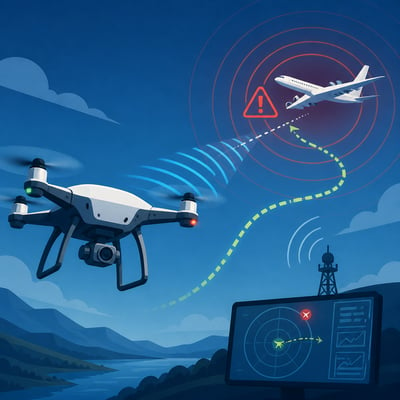
This topic centers on systems that help drones detect nearby aircraft and avoid collisions during beyond visual line of sight operations. The material shows two main approaches: onboard avoidance software and ground-based detection tied into traffic-management platforms. It matters because reliable detect-and-avoid capability is becoming a key requirement for scaling BVLOS flights, whether for commercial operations, security missions, or future certification rules.
First Article: 06/08/26
Latest Article: 07/15/26
Summary
- Two technical paths dominate: onboard detect-and-avoid on the aircraft and ground-based detection feeding centralized airspace management.
- The tests focus on practical collision-risk scenarios, including cooperative and non-cooperative traffic, varied lighting, and aircraft above and below the horizon.
- FAA Part 108 BVLOS rulemaking is an important backdrop, with onboard avoidance seen as a likely compliance issue for some operations.
- High Lander's work emphasizes integration between detection systems, UTM, and fleet management rather than a standalone sensor product.
- Security and critical-infrastructure use cases appear alongside commercial BVLOS, especially for solar-site monitoring in Israel.
- A recurring challenge is handling non-cooperative aircraft without relying only on transponders or human observers.
History
This topic is new, but as new articles are added to it this area will summarize shifts, changes and expansions of the issues.
Featured
Timeline: 38 Days
Hover over any logo to see coverage summary, click for full article.