
 Climate
 Privacy
 Bob Dylan
 Drones
 Data Centers
 AI Governance
 2026 Maine Senate Race
FAA Part 108 Targets BVLOS Expansion
Coverage from The Conversation, Fast Company, and others
Articles
27
Active Days
79
The Topic
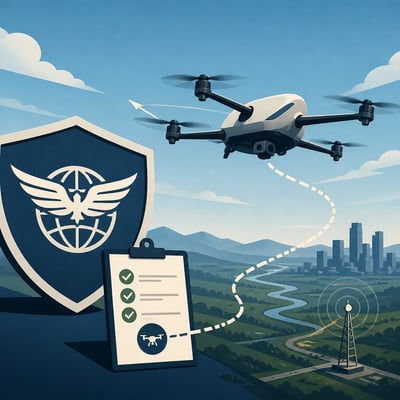
The FAA is developing Part 108 to create a broader approval framework for beyond-visual-line-of-sight drone flights, including potentially larger, heavier, and more autonomous aircraft. The change could reduce reliance on individual waivers and support delivery, infrastructure inspection, agriculture, emergency response, and other long-distance operations. Its practical impact depends on airspace integration, detect-and-avoid capabilities, command-and-control systems, right-of-way rules, and protections against unsafe or malicious drone use.
First Article: 05/07/26
Latest Article: 07/24/26
Summary
- Part 108 is intended to replace much of the current case-by-case waiver model for qualifying BVLOS operations.
- Routine BVLOS access could expand drone delivery, railroad and pipeline inspection, agricultural monitoring, and emergency-response missions.
- Autonomous operations will require reliable detect-and-avoid, command-and-control, and integration with the National Airspace System.
- Public safety Drone as a First Responder programs and delivery fleets are increasingly competing for the same low-altitude airspace.
- UAS Traffic Management and right-of-way rules are not yet mature or settled enough to manage large-scale overlap.
- Noise, privacy, rogue-drone, and critical-infrastructure protection concerns remain alongside the commercial opportunity.
History
The story is largely stable, but the current version sharpens the regulatory framing by emphasizing replacement of the waiver model and clarifying that large-scale overlap in low-altitude airspace is not yet workable. It also narrows the operational context slightly, dropping some prior examples and stressing unresolved right-of-way and security issues.
The story broadens from a general BVLOS rulemaking framework into a more concrete implementation and airspace-conflict narrative, with new emphasis on how delivery and public safety operators will compete for low-altitude space. It also adds a reported real-world scaling constraint: current visual-line-of-sight requirements have already made at least one delivery pilot uneconomic.
Featured
Timeline: 79 Days
Hover over any logo to see coverage summary, click for full article.