
 Climate
 Privacy
 Bob Dylan
 Drones
 Data Centers
 AI Governance
 2026 Maine Senate Race
Japan Fields Low-Cost Cardboard Drones
Coverage from Futurism, Interesting Engineering, and others
Articles
6
Active Days
12
The Topic
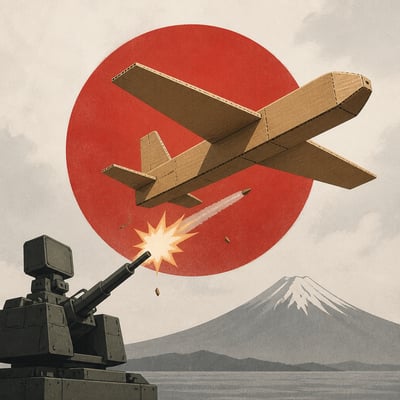
Japan is acquiring AirKamuy 150 fixed-wing drones made largely from coated corrugated cardboard for inexpensive, rapidly assembled military use. The Japan Maritime Self-Defense Force is using the platform as an aerial target, while its flat-pack design, low reported price, and mass-production approach could support more frequent training and larger inventories of expendable drones. Reports also describe possible reconnaissance or attack applications, but those roles appear prospective rather than fully confirmed.
First Article: 04/29/26
Latest Article: 05/10/26
Summary
- AirKamuy 150 drones are built largely from coated corrugated cardboard and supplied by Japanese startup AirKamuy.
- The Japan Maritime Self-Defense Force is using the aircraft as expendable aerial targets for training.
- Reported unit prices range from about $2,000 to $2,500, substantially below many conventional military drones.
- Flat-pack shipping and assembly in roughly five minutes are intended to enable rapid production and deployment.
- Low radar reflectivity and possible sensor or payload carriage are cited as potential advantages, but operational roles beyond target use remain unclear.
- Japan’s adoption reflects a broader effort to expand domestic, scalable drone production and military integration.
- A related Japanese Shiraha project indicates parallel development of even cheaper wooden drones, though it is separate from AirKamuy 150.
History
The story has shifted from a general account of cardboard drones for training and possible military use to a more specific update confirming current use, pricing, and production intent for the AirKamuy 150. The main new wrinkle is that broader reconnaissance or attack roles are now framed as unverified possibilities rather than established plans.
The story has shifted from general procurement and training interest to confirmed operational use: the Japan Maritime Self-Defense Force is already using the AirKamuy 150 as a target platform. The update also adds a clearer strategic rationale, emphasizing expendable mass, domestic production resilience, and possible reconnaissance utility.
Featured
Timeline: 12 Days
Hover over any logo to see coverage summary, click for full article.