
 Climate
 Privacy
 Bob Dylan
 Drones
 Data Centers
 AI Governance
 2026 Maine Senate Race
Sudan Drone War Hits Civilians
Coverage from Reuters, CNN, and others
Articles
14
Active Days
85
The Topic
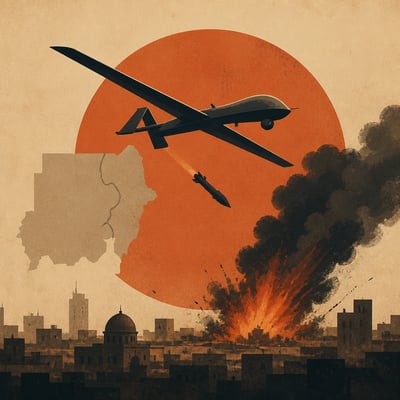
Drones have become a central means of warfare in Sudan’s civil war, used by both the Sudanese Armed Forces and the Rapid Support Forces for surveillance, battlefield strikes, and attacks on transport routes and infrastructure. El-Obeid and surrounding North Kordofan have emerged as a major flashpoint, with reported strikes affecting markets, schools, water facilities, aid shipments, and civilian vehicles. The escalation is worsening humanitarian conditions and complicating attribution, while reported foreign supplies are enabling both sides to sustain operations beyond traditional front lines.
First Article: 04/27/26
Latest Article: 07/20/26
Summary
- Both the SAF and RSF are using drones for surveillance, battlefield support, supply-line attacks, and strikes on infrastructure.
- El-Obeid has become a key drone-war flashpoint as the RSF maintains a siege around the SAF-held strategic city.
- UN reporting cited 15 drone strikes around El-Obeid in June that killed at least 45 civilians, while broader UN figures recorded at least 880 civilian deaths from drone strikes during the first four months of 2026.
- Reported strikes have hit markets, schools, fuel stations, water infrastructure, civilian vehicles, homes, and a UNHCR aid truck.
- Foreign-supplied systems, including reported Turkish Bayraktar TB2 and Chinese FH-95 drones, are expanding the capabilities of both sides.
- Attribution remains contested, with allegations involving the SAF, RSF, the United Arab Emirates, and Ethiopia not independently verified in the supplied reporting.
- Drone operations allow attacks to continue during the rainy season, when mud and flooded roads restrict conventional troop and vehicle movements.
History
The story now frames drone warfare as more operationally embedded and geographically broad, with both Sudanese factions explicitly using drones for surveillance, battlefield support, and supply-line disruption. It also adds a new tactical advantage: drone operations continuing through the rainy season when ground movement is constrained.
The story has sharpened around El-Obeid as the main drone-war flashpoint, with new reporting quantifying the civilian toll and showing the fighting is more intense and more lethal than before. The updated version also adds stronger evidence that foreign-made systems are being used by both sides, while responsibility for strikes remains contested.
Featured
Timeline: 85 Days
Hover over any logo to see coverage summary, click for full article.