
 Climate
 Privacy
 Bob Dylan
 Drones
 Data Centers
 AI Governance
 2026 Maine Senate Race
Schools Test Active-Shooter Response Drones
Coverage from The Guardian, Yahoo, and others
Articles
25
Active Days
90
The Topic
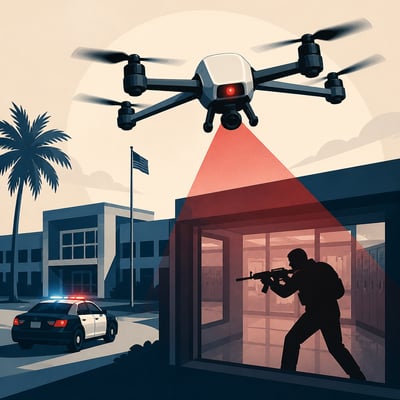
Campus Guardian Angel is testing remotely piloted indoor drones at schools in Georgia and Florida to respond to active-shooter threats before police arrive. The drones are designed to launch from on-site charging docks, use mapped buildings to reach a target quickly, provide live video and audio, and deploy measures such as sirens, strobes, pepper effects or kinetic impacts. State-funded pilots and demonstrations are expanding interest, but the system has not been used in a reported real active-shooter incident, leaving questions about performance, safety, cost and legal limits.
First Article: 04/30/26
Latest Article: 07/28/26
Summary
- Georgia allocated $550,000 for a Campus Guardian Angel pilot involving selected high schools, scheduled to run through June 2027.
- Florida is funding a $557,000 rollout involving Leon, Broward and Volusia counties; Deltona High School reportedly received 39 drones.
- The drones are stored at schools, launched by alarms or panic buttons, and remotely operated from Austin, Texas.
- Company demonstrations show drones using strobe lights, sirens, pepper effects, live communications and ramming or other kinetic impacts to distract or slow a target.
- The system is presented as a supplement to school resource officers and police, intended to buy time and provide location information rather than replace responders.
- Florida’s proposed RADAR deployment combines drone response with ZeroEyes firearm detection and Ark Strategic 3D mapping.
- No reported deployment has involved a real active-shooter incident, and demonstrations have not resolved questions about moving targets, bystanders, communications or drones being disabled.
History
The story has shifted from general pilot activity to a more concrete deployment model, with Florida now linked to a named RADAR package that combines drones, firearm detection, and building maps. The update also slightly narrows the unresolved issues from broad legal and safety concerns to specific operational gaps like moving targets, bystanders, communications, and disabled drones.
The story has broadened from a couple of state-backed school drone pilots into a more developed multi-state implementation effort, with Arkansas now entering as an active demonstration market and Florida’s system more explicitly integrated with other safety tools. The framing also shifts toward deployment logistics and legal-accountability concerns rather than novelty.
Featured
Timeline: 90 Days
Hover over any logo to see coverage summary, click for full article.