History
07/27/20260 new articles
The story is now more specific about enforcement intensity and penalties: authorities say more than 700 drones have been seized, and unauthorized flights can trigger six-figure fines, confiscation, or prosecution. The framing also broadens slightly from World Cup venue security to a more explicit policy push for stronger drone controls near airports and critical infrastructure.
07/25/20260 new articles
The story has become more concrete and expansive: enforcement is now described as a nationwide 11-host-city operation with sharply higher seizure totals and broader federal participation. It also adds new policy and funding signals, suggesting the World Cup crackdown is becoming a template for wider counter-drone controls.
- Restrictions now cover all 11 U.S. host cities.
- Seizures rose to more than 700 by July 16.
- The federal government supplied $250 million for counter-drone security.
- TSA joined the listed enforcement agencies.
- FAA may expand critical-infrastructure restriction petitions.
07/24/202635 new articles
The story shifted from a broad crackdown around World Cup venues to a more explicit nationwide counter-UAS operation with formal authorization pathways for limited approved flights. Enforcement is now framed as a coordinated security program spanning federal, state, and local agencies rather than just repeated seizures and charges.
- Restrictions expanded to fan festivals, hotels, and training sites.
- FAA clarified approved flights may operate with DHS authorization.
- Federal, state, and local agencies are now described as jointly intercepting drones.
- Ground Intercept Teams are explicitly part of the enforcement posture.
07/05/2026Topic Formed
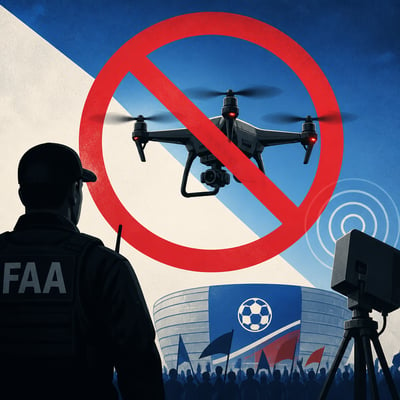
Federal authorities are enforcing strict no-drone zones around FIFA World Cup stadiums and fan events across the United States, seizing unauthorized aircraft and bringing charges in multiple cities. The FAA, FBI, and partner agencies are using temporary flight restrictions, detection systems, and counter-drone teams to protect crowded venues and critical infrastructure. The reporting centers on a broad crackdown rather than isolated incidents, with repeated violations by recreational and commercial operators and escalating penalties for noncompliance.

 Climate
 Privacy
 Bob Dylan
 Drones
 Data Centers
 AI Governance
 2026 Maine Senate Race