
 Climate
 Privacy
 Bob Dylan
 Drones
 Data Centers
 AI Governance
 2026 Maine Senate Race
Zipline Expands U.S. Drone Delivery
Coverage from CNBC, DroneXL, and others
Articles
17
Active Days
71
The Topic
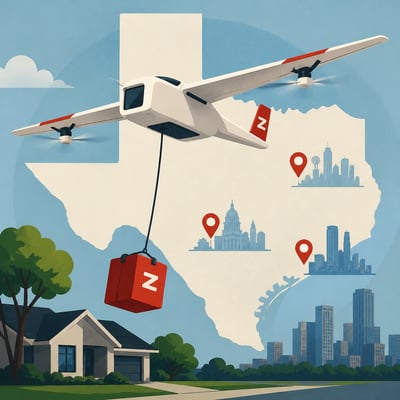
Zipline is expanding autonomous, electric drone delivery across U.S. markets, using tethered drops from Platform 2 aircraft for food, retail goods, prescriptions, lab samples, and medical supplies. Texas is the company’s most active commercial expansion area, while partnerships with Cleveland Clinic, Memorial Hermann, and BayCare extend the model into healthcare. The rollout shows increasing operational scale, but broader adoption still depends on local approvals, infrastructure, pricing, and pending FAA rules for Beyond Visual Line of Sight operations.
First Article: 05/18/26
Latest Article: 07/27/26
Summary
- Zipline is scaling suburban U.S. delivery networks, with Dallas-Fort Worth and Houston operating and Austin planned next.
- Platform 2 drones retrieve packages from merchant or healthcare dropboxes and lower them by tether from roughly 300 feet.
- Food and retail partnerships include Walmart, Chipotle, Little Caesars, Popeyes, Wonder, and other merchants.
- Cleveland Clinic plans a limited prescription-delivery pilot in Beachwood, Ohio, with possible expansion across Northeast Ohio.
- BayCare plans a Tampa Bay medical network for prescriptions, lab samples, and supplies beginning in late 2027, subject to approvals.
- Zipline reports more than 2.5 million commercial deliveries and over 135 million autonomous commercial miles, though these figures are company-reported.
- The commercial model is expanding beyond medical and humanitarian missions into routine consumer delivery, but pricing and long-term economics are not yet clear.
History
Zipline’s story has broadened from a Texas-centered rollout into a more explicit multi-sector commercial scaling narrative, with healthcare partnerships and FAA constraints now more prominent. The current version also adds clearer evidence that the model is moving toward repeatable suburban delivery networks rather than isolated pilots.
The story has expanded from a Texas-centric rollout into a broader U.S. commercialization plan, with new healthcare and restaurant deployments scheduled in Ohio and Florida. It also adds clearer execution detail on Platform 2 and highlights regulatory and timing constraints as the main limiting factors.
Featured
Timeline: 71 Days
Hover over any logo to see coverage summary, click for full article.