
 Climate
 Privacy
 Bob Dylan
 Drones
 Data Centers
 AI Governance
 2026 Maine Senate Race
Archival Dylan
The ongoing major issues seen in articles and topics over time.
The Drivers
14
Articles Related
475
The Big Picture
The continuing recovery, curation, and interpretation of Dylan manuscripts, lyric drafts, recordings, tapes, bootlegs, photographs, ephemera, museum objects, provenance, and unreleased material as a major source of historical knowledge.
Dylan scholarship depends heavily on archives because unreleased recordings, alternate takes, private tapes, and historical sets regularly reshape understanding of his artistic development and performance history.
Categories
Recordings & Discography, Dylan Studies, Career & Biography, Songs & Songwriting
Keywords
1956-1963 recordings, 1962 demos, 1975 live recordings, Abandoned Love, Albert Grossman provenance, Allen Ginsberg provenance, alternate album sequence, alternate takes, Ankor Wat, anniversary exhibition, archival correction, archival photographs, archival presentation, archival releases, archival restoration, archive sound design, Basement Tapes restoration, Basement Tapes-era manuscripts, Big Pink, Blood on the Tracks sessions, Bob Dylan Archive, Bob Dylan Center, bootleg series, Bootleg Series Vol. 18, Bootleg Series Vol. 18: Through the Open Window, catalog compilations, Christie's recordings, chronological archival narrative, club recordings, concert photography, copyright collections, counterfactual album, Desire session outtakes, Dylan archives, Dylan memorabilia market, early artistic formation, early Dylan recordings, early Dylan tapes, early live recordings, early-career reissues, expanded editions, Fragments, Genelec, Going Electric exhibition, handwritten lyric drafts, Hard Rain, historical preservation, historical reconstruction, home tapes, I'm Not There draft, I'm Not There lyric draft, Leeds Music recordings, lost songs, lyric draft auctions, Manchester 1966 photographs, Manchester photographs, manuscript provenance, More Blood, More Tracks, museum audio installation, museum exhibitions, New York session recordings, New York Skyline, newly surfaced photographs, Omega Auctions, oral history, performance documentation, private Dylan manuscripts, private recordings, private sale recordings, radio recordings, rare tapes, recording chronology, restoration work, Sally Grossman, Sally Grossman provenance, Sean Wilentz, session documentation, Shadow Kingdom acetates, Steve Berkowitz, T Bone Burnett acetates, The Best of Bob Dylan, The Bitter End, The Other End, Thin Wild Mercury, Through the Open Window, Time Out of Mind Sessions, Travelin' Thru, Tulsa archive, Tulsa programming, unofficial live documentation, unreleased early performances, unreleased recordings, venue corrections
The Drivers
The Topics below, and their articles, all focus on, exemplify, or help to explain this theme.
Primary
- 99
Budokan Era Reassessment
Recent coverage is dominated by Bob Dylan's expanded Budokan archive release, with repeated attention to the 1978 Tokyo concerts, newly restored sound, previously unreleased material, and the long-running debate over the arrangements. The material consistently treats these shows as a major late-1970s turning point in Dylan's live practice: large-band instrumentation, saxophone and flute textures, backing vocals, and radical reworkings of familiar songs. Older reviews of the 1979 Bob Dylan at Budokan LP remain part of the cluster, but current writing is less about the original criticism and more about recontextualizing the performances through the complete box set and related bootleg or retrospective material. The topic is coherent and fairly dense, with a stable focus on one performance era and its archival recovery.
Articles: 47
Last Updated: 04/25/2026
- 98
Time Out Of Mind Archival Reappraisal
Recent coverage is dominated by Fragments: Time Out Of Mind Sessions, which revisits Dylan's 1996-1997 recording period through a remix, outtakes, alternates, and live recordings. The material consistently emphasizes how songs from Time Out Of Mind developed across studio sessions and later performances, with Daniel Lanois, Michael Brauer, and Columbia/Legacy as recurring anchors. The topic is coherent and relatively stable: it is not a broad Dylan catch-all, but a focused archival reappraisal of one late-1990s album era. Historical context appears mainly as support for the current box set rather than as a separate strand. Signal density is moderate to dense, with strong cross-article agreement and little fragmentation.
Articles: 58
Last Updated: 06/11/2026
- 98
Dylan’s 1974 Live Archive
Recent coverage is dominated by Bob Dylan and The Band's 1974 arena tour archival box set, which reopens the tour through newly mixed tapes, extensive unreleased material, and close attention to changing arrangements, vocal strain, and setlist variation. Older pieces add context through 1971 and 1973 recordings, but the strongest signal is the 1974 live archive and its reassessment of Dylan's stage work.
Articles: 60
Last Updated: 07/09/2026
- 98
Dylan Draft Lyrics Head To Auction
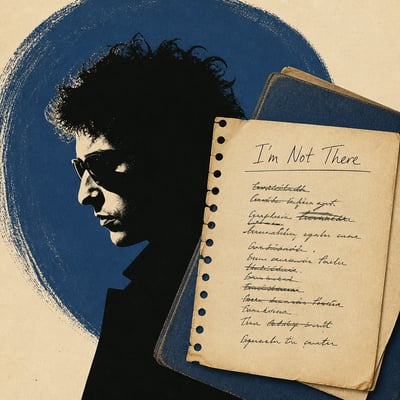
A working lyric draft for Bob Dylan's "I'm Not There" was found inside a first-edition copy of Allen Ginsberg's Ankor Wat formerly owned by Sally Grossman, a close associate of Dylan and wife of manager Albert Grossman. The draft is associated with Dylan's 1967 work with The Band and is being offered through Omega Auctions with an estimated value of £20,000 to £40,000. The story combines unusual provenance with continuing collector interest in documents that show how unreleased or later-released songs developed.
Articles: 20
Last Updated: 07/19/2026
- 98
Dylan Revisits Basement Tapes Material
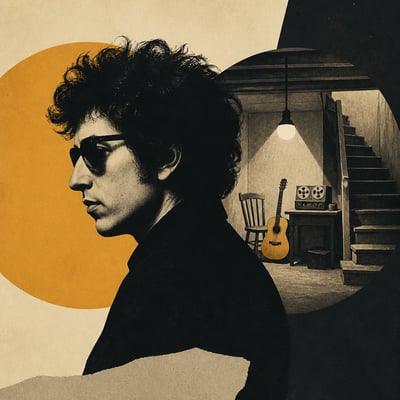
The topic centers on Bob Dylan and The Band’s 1967 Basement Tapes recordings and their continuing presence in archival releases, historical retrospectives, tribute performances, and Dylan’s live setlists. Dylan’s return to songs such as “I Shall Be Released” has renewed attention on the informal sessions that also helped shape The Band’s Music From Big Pink and remain a source of contemporary reinterpretation.
Articles: 19
Last Updated: 07/01/2026
- 95
Dylan's 1966 Manchester Electric Turn
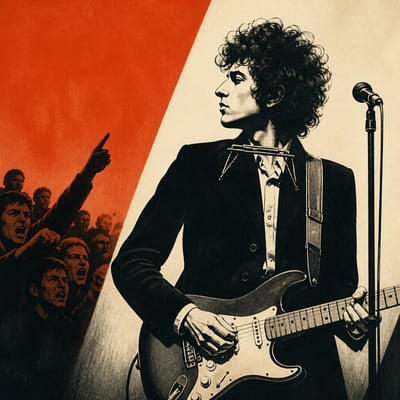
Recent coverage keeps returning to Bob Dylan's 1966 Manchester Free Trade Hall show as a defining electric-era moment. The strongest signal is not just the heckle itself, but the way later releases, photos, and recollections continue to clarify the set, the venue, and the performance's place in Dylan history. Across the material, the concert is treated as both a live turning point and an archival object, with recurring attention to acoustic-versus-electric contrast, audience hostility, and corrected details about who shouted "Judas" and where it happened. More current pieces also show the event being re-presented through newly surfaced photographs and anniversary retrospectives rather than through new live activity. The cluster is coherent and stable, with a strong historical focus and moderate density concentrated around one landmark performance and its afterlife.
Articles: 19
Last Updated: 07/21/2026
- 89
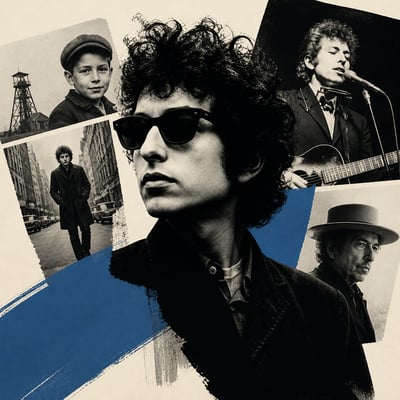
This topic centers on Bob Dylan presented through archival photographs and closely related biographical context. The material traces his path from Hibbing and early New York performances through major career landmarks such as Newport, the electric era, tours, awards, and later-era projects. It matters because the visual framing organizes Dylan’s career into a clear historical timeline while also showing how his public image has been built through performance, press, and documentation.
Articles: 41
Last Updated: 05/15/2026
- 87
Papal References To Bob Dylan
Recent coverage is dominated by Pope Leo XIV quoting Bob Dylan’s unpublished 1963 song Go Away You Bomb in a foreword on nuclear disarmament. The strongest pattern is a Vatican framing of Dylan’s antiwar writing as a moral reference point for peace, conscience, and resistance to nuclear escalation, with older papal-Dylan connections providing context. The signal is fairly coherent and dense, but it is narrow in scope and heavily concentrated around one Vatican publication. A smaller secondary thread concerns the wider history of Dylan references in Catholic discourse, including performances for Pope John Paul II and a fabricated posthumous quote tied to Pope Francis.
Articles: 15
Last Updated: 07/29/2026
- 84
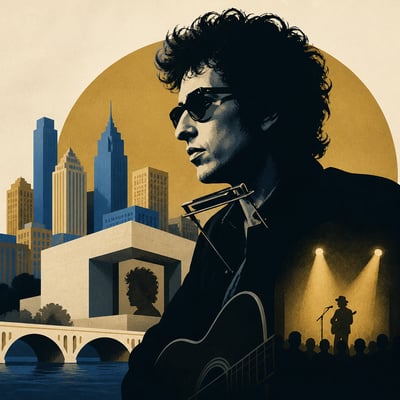
The topic centers on the 60th anniversary of Bob Dylan’s Blonde on Blonde, which is being marked through anniversary coverage and a Dylan Center concert in Tulsa. The material consistently frames the album as a major milestone in Dylan’s catalog while emphasizing its continuing appeal, track sequencing, and distinctive sound. One thread is celebratory programming around the record; another is retrospective criticism that reconsiders why the album remains a defining release.
Articles: 37
Last Updated: 07/20/2026
Secondary
- 86
Dylan Tour And Archival Releases
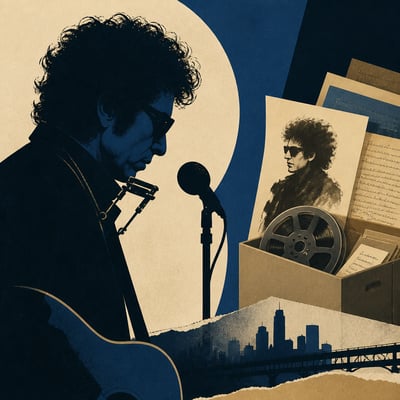
The cluster is primarily about Bob Dylan’s ongoing mid-2020s live activity and the parallel stream of archival/copyright releases that document earlier eras of his career. Current coverage emphasizes touring continuity into 2026, shifts in billing and routing, and incremental changes in live arrangement and instrumentation. A substantial secondary strand focuses on archival products and scholarship, especially copyright collections and the Tulsa Dylan Center, which frame Dylan’s past recordings and manuscripts as an active part of present-day attention.
Articles: 37
Last Updated: 07/19/2026
- 86
Springtime In New York Review
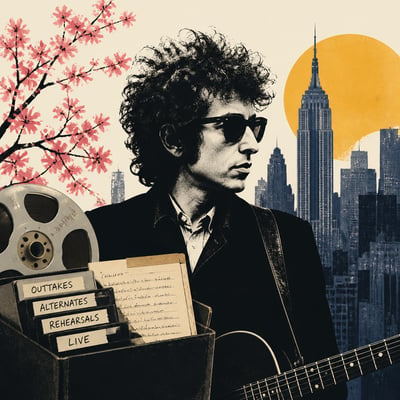
This topic centers on Bob Dylan's Springtime in New York: The Bootleg Series Vol. 16, a five-disc archival set drawn from his 1980-1985 recording period. The material is presented as a reassessment of a frequently dismissed era, using outtakes, alternates, rehearsals, and live recordings to show stronger songwriting and more active experimentation than the finished albums often suggested. Across the coverage, the release is treated as evidence that Dylan's early-1980s work remained productive, uneven, and worth revisiting rather than simply writing off.
Articles: 27
Last Updated: 05/31/2026
- 84
Bob Dylan Live And Farm Aid
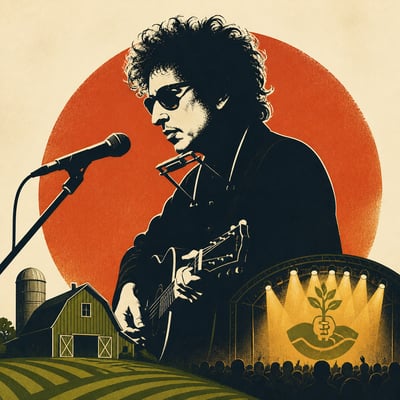
Recent coverage emphasizes Bob Dylan's late-career live performances, especially Farm Aid 40 and related benefit appearances, where he plays short, rearranged versions of older songs with distinctive piano-led backing and revised phrasing. A second strong thread revisits Farm Aid's origins in Dylan's 1985 Live Aid remark, while archival releases and historical reflections continue to frame his catalog as actively reinterpreted rather than fixed.
Articles: 32
Last Updated: 07/24/2026
- 77
Dylan And The Grateful Dead Revisited
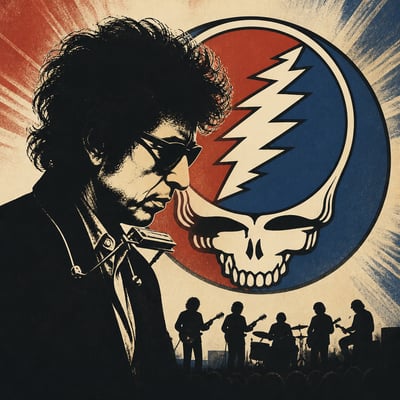
The topic centers on Bob Dylan’s 1986 first performances with the Grateful Dead, their expanded 1987 tour, and the live recordings and archival material that document the collaboration. Retrospective coverage presents the partnership as musically uneven but often more open and effective than its reputation suggests, particularly when Jerry Garcia, Bob Weir, and the Dead’s flexible approach added depth to Dylan’s performances. The material also places the collaboration within Dylan’s difficult mid-1980s touring period and the transition toward his later resurgence.
Articles: 17
Last Updated: 07/07/2026
- 70
Rolling Thunder Revue Retrospectives
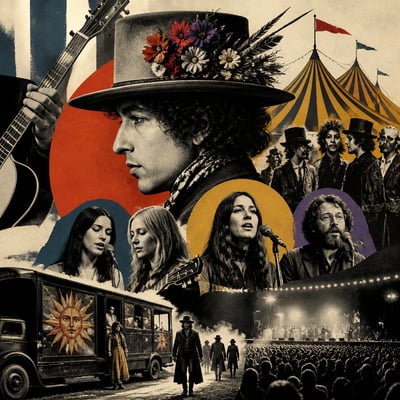
This material revisits Bob Dylan's Rolling Thunder Revue as a landmark live period and a continuing source of archival releases, collaborator recollections, and debate over performance history and documentary framing. Recent pieces emphasize setlist variation, recording recovery, and how the tour's theatrical, collaborative style still shapes Dylan interpretation.
Articles: 46
Last Updated: 07/28/2026