
 Climate
 Privacy
 Bob Dylan
 Drones
 Data Centers
 AI Governance
 2026 Maine Senate Race
Direct-to-Consumer DNA Privacy Risks
Coverage from Newsanyway, The New York Times Wirecutter, and others
Articles
4
Active Days
130
The Topic
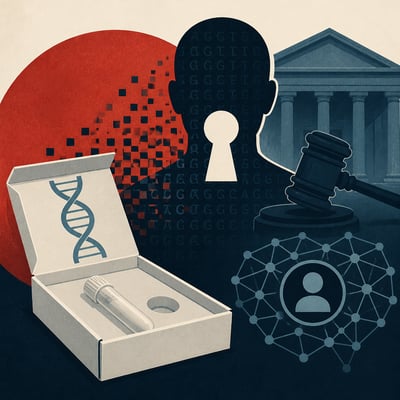
Direct-to-consumer DNA testing companies collect highly sensitive genetic information under privacy policies that may provide the primary consumer safeguards, because many firms are not HIPAA-covered entities. The material highlights exposure from breaches, law-enforcement access, corporate acquisitions, research and AI commercialization, and the limits of de-identification. U.S. state laws are expanding consent and disclosure requirements, but protections and legal interpretations remain fragmented.
First Article: 02/15/26
Latest Article: 06/24/26
Summary
- Many direct-to-consumer genetic testing firms may fall outside HIPAA, leaving privacy policies and consent terms as key protections.
- Genetic data can affect relatives and may remain identifiable or re-identifiable even after conventional identifiers are removed.
- Breaches, bankruptcy proceedings, acquisitions, and commercial partnerships can change how genetic and clinical data is accessed or used.
- Company practices differ on sample retention, research sharing, law-enforcement matching, and third-party disclosures.
- Voluntary industry privacy standards do not provide enforceable, uniform protections.
- State genetic privacy laws are expanding, including restrictions on secondary use, downstream transfers, and consent scope.
- AI training and post-acquisition data use are emerging sources of litigation and scrutiny.
History
The story broadens from privacy and bankruptcy concerns into a wider account of how consumer genetic data can be accessed, retained, and commercialized across breaches, acquisitions, law-enforcement requests, and AI partnerships. It also now places more emphasis on state-level legal fragmentation and voluntary industry standards rather than just consumer-protection gaps.
Featured
Timeline: 130 Days
Hover over any logo to see coverage summary, click for full article.