
Last Update: 08/01/2026 at 3:33 PM EST

Canada’s Bill C-22 Targets Encrypted Services

Coverage from TechRadar, The Record, and others

Articles

19

Active Days

127

The Topic
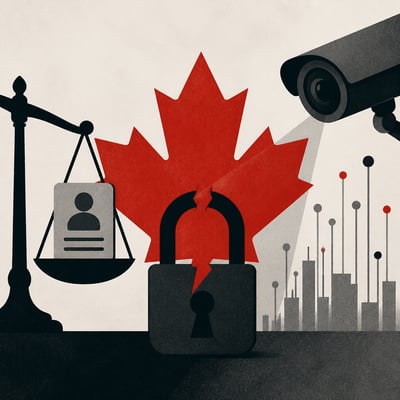
Canada’s Bill C-22 Targets Encrypted Services topic image

Canada’s Bill C-22 would revise lawful-access rules while allowing regulations that could require certain communications providers to support access capabilities and retain categories of metadata for up to one year. The government says the proposal excludes communication content and browsing history and adds oversight, while technology companies, privacy advocates, and some U.S. policymakers warn that retention and technical-assistance requirements could weaken security, expose sensitive location patterns, and affect services operating across borders. The legislation remains contested as it advances through Parliament.

First Article: 03/13/26

Latest Article: 07/17/26

Summary

  • Bill C-22 would permit regulations requiring designated core providers to retain categories of metadata for up to one year.
  • The proposal excludes communication content, web-browsing history, and social-media activity from the described retention authority.
  • The bill narrows some warrantless subscriber-information demands by introducing judicially reviewed production orders, but separate surveillance-capability provisions remain contentious.
  • VPN providers, encrypted messaging services, Apple, and Google are seeking clearer encryption protections and metadata definitions; Signal and Windscribe have raised the possibility of leaving Canada.
  • Critics argue that retained transmission and location data could reveal communications patterns and reconstruct movements even without storing message content.
  • The legislation could affect foreign technology companies and cross-border data flows, prompting concern in the United States and among digital-rights researchers.
  • Canada’s parallel push for sovereign AI and stronger data protections reflects broader concern about dependence on foreign platforms and infrastructure.

History

07/22/2026

The story has shifted from general warnings about Bill C-22 to a more specific parliamentary status update, with the House reportedly passing it and Senate approval still pending. The current version also clarifies the bill’s narrower exclusions and adds a broader sovereignty/data-protection framing.

07/21/2026

The story is now framed more explicitly as a cross-border issue, with U.S. officials and lawmakers joining the opposition to Bill C-22. The updated version also sharpens the list of major corporate critics and adds the claim that the bill’s metadata rules could create economic and competitiveness costs.

Full History

Featured

Timeline: 127 Days

Mar 13Apr 10May 8May 22Jun 19Jul 17

Additional Articles

⭐⭐⭐⭐⭐⭐⭐⭐

Michael Geist / Michael Geist03-13-2026
Canada's government introduced Bill C-22, the Lawful Access Act, yesterday to limit warrantless subscriber data demands while expanding surveillance capabilities within Canadian networks.
Michael Geist / Michael Geist03-17-2026
Canadian government proposes metadata retention for core providers to store transmission data including location for up to one year in Canada.

⭐⭐⭐⭐⭐

Reclaim The Net / Ken Macon03-13-2026
Canada's Liberal government introduces Bill C-22 in 2026 to compel providers in Canada to retain metadata for one year for law enforcement access.
Reclaim The Net / Dan Frieth07-17-2026
Ron Wyden urged U.S. officials to oppose Canada\u2019s Bill C-22 as police and CSIS access, metadata retention, and possible encryption weakening could affect Apple and Google.
EFF / Thorin Klosowski05-11-2026
Canada proposes Bill C-22 to require year-long metadata retention and mandate lawful-access backdoors, with critics citing encryption weakening and increased breach risk.
EFF / Thorin Klosowski06-18-2026
Canada's government advances Bill C-22 toward a June 19 vote, with critics warning metadata retention and demanded encryption backdoors expand surveillance capabilities.

⭐⭐⭐

Yahoo / Rob Gillies06-04-2026
Mark Carney announced Canada plans privacy legislation after warning that foreign AI platforms could access Canadian data via international cross-border flows.
markets.businessinsider.com05-16-2026
Yanik Guillemette and leaders at Meta, Apple, and Shopify oppose Canada's Bill C-22 after warnings about encryption weakening and surveillance-driven requirements.
LifeSiteNews / Anthony Murdoch05-15-2026
Justice Centre for Constitutional Freedoms told a House of Commons committee that Bill C-22 would expand police access to subscriber data and require one-year metadata retention while reducing judicial oversight.
TechNadu05-16-2026
Windscribe warns Canada Bill C-22 lawful-access proposals may force user logging, driving possible relocation if parliamentary revisions fail.
Markets Insider05-18-2026
Yanik Guillemette and major tech firms criticize Canada's proposed Bill C-22 in 2026, warning encryption compromise could deter AI and cloud investment.
Reclaim The Net / Christina Maas03-24-2026
Gary Anandasangaree defended Canada's Bill C-22, which mandates one-year electronic service provider metadata retention for police and CSIS access.
The Manila Times06-01-2026
Yanik Guillemette said Bill C-22 amendments, discussed after Standing Committee sessions, risk bulk metadata retention and end-to-end encryption weakening in Canada.
Juno News05-25-2026
Canadian MPs are scheduled to vote on Bill C-22, expanding metadata retention and data handover for police and CSIS amid opposition from major tech firms and U.S. lawmakers.
Markets Insider06-01-2026
Yanik Guillemette in Montreal criticized Bill C-22 amid signals of amendments from Public Safety Canada over encryption and mandatory one-year metadata retention.

⭐️⭐️

UL Lawyers03-19-2026
On March 19, 2026, Toronto officials unveiled Bill C-22 updates requiring judicial authorization for subscriber information access and potentially up to one-year metadata retention by telecom providers.