
 Climate
 Privacy
 Bob Dylan
 Drones
 Data Centers
 AI Governance
 2026 Maine Senate Race
Canada’s Privacy Reform Faces Senate Tests
Coverage from IAPP.org, Al Jazeera, and others
Articles
14
Active Days
146
The Topic
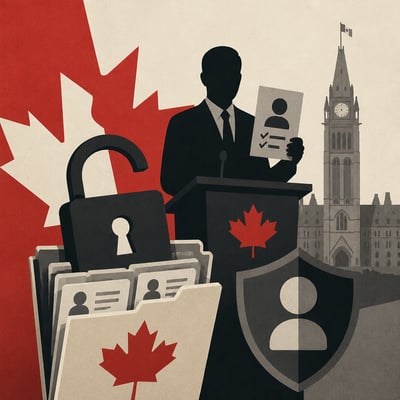
Canada is pursuing a major update to private-sector privacy rules while Parliament debates separate provisions governing political parties’ use of voter data. Bill C-36 would expand rights over inferred personal information, automated decisions, children’s data and deletion, while Bill C-4 would create a limited federal regime for political parties and has drawn Senate scrutiny. The broader reform debate also includes data sovereignty, cross-border transfers, enforcement powers and how privacy law should address AI-related harms.
First Article: 02/19/26
Latest Article: 07/14/26
Summary
- Bill C-36 would recognize privacy as a fundamental right and strengthen deletion, child-privacy and automated-decision transparency requirements.
- The reform debate increasingly addresses AI-generated inferences, not only the personal data organizations directly collect.
- Bill C-4 would exempt political parties from provincial privacy laws while relying mainly on party-authored policies and limited electoral penalties.
- Senators rejected an attempt to remove Bill C-4’s privacy section but approved a three-year sunset clause for the changes.
- Privacy Commissioner Philippe Dufresne is seeking stronger enforcement powers, breach obligations, proactive audits and protections designed around children’s interests.
- Data sovereignty and risk assessments for cross-border transfers may shape the government’s next comprehensive privacy bill.
- The legislative picture remains unsettled, with Bill C-36’s final provisions and Bill C-4’s path to enactment subject to parliamentary action.
History
The main change is a sharper framing of the reform package: Bill C-36 is now tied to a fundamental-rights model and explicit AI/inference protections, while Bill C-4’s political-party regime has advanced with a Senate-approved sunset clause. The story also adds a clearer next-phase policy debate around data sovereignty and cross-border transfer risk assessments.
The story has sharpened from a broad privacy-law rewrite into two concrete legislative tracks, with Bill C-36 now the main private-sector reform vehicle and Bill C-4 the focal point for political-party privacy rules. The emphasis has also shifted toward institutional design and enforcement, especially whether authority stays with the Privacy Commissioner or moves to new access/enforcement bodies.
Featured
Timeline: 146 Days
Hover over any logo to see coverage summary, click for full article.