History
07/21/20262 new articles
The story shifts from broad state-level and retailer-specific scrutiny to a more concrete federal investigative and legislative push focused on how pricing algorithms use consumer data. The updated framing also broadens the policy debate to explicitly include transparency, competition, and opt-out mechanisms.
06/17/20263 new articles
The story has broadened from a general state-and-federal push against surveillance pricing into a more concrete regulatory fight, with New York now joining the state-level response and the coverage emphasizing actual bans and disclosure rules rather than just proposed limits. The updated version also gives more weight to retailer denials and guardrails, suggesting the debate is now centered on how identity-based pricing could be controlled in practice.
06/05/20263 new articles
The story has broadened from a New Jersey-led grocery pricing fight into a wider, more clearly articulated state-federal regulatory campaign against surveillance pricing across grocery and adjacent retail. The latest version also adds clearer evidence of Maryland’s role and a more explicit view that the near-term story is regulatory scrutiny, not proven widespread deployment.
05/30/20266 new articles
The story has broadened from a state-and-federal anti-surveillance-pricing push into a more active regulatory and oversight campaign, with Congress and the FTC now more explicitly involved. The latest version also adds delivery platforms and AI/third-party data as central targets, not just grocery-store shelf-label pricing.
- Congress and FTC scrutiny are now explicit parts of the story.
- Delivery platforms are newly included alongside grocery retailers.
- AI, machine learning, and third-party data are now named pricing inputs.
- The debate now centers on bans, disclosures, and opt-out rules.
- New Jersey is described as the most visible policy battleground.
05/11/2026Topic Formed
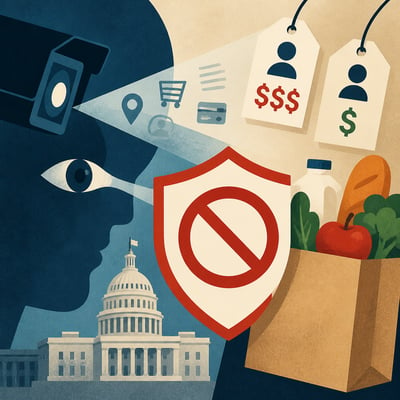
U.S. lawmakers and privacy advocates are moving to restrict surveillance pricing in grocery and retail settings, especially when companies use personal data, AI, or electronic shelf labels to set individualized prices. The strongest current signal is legislative action in New Jersey, Maryland, New Hampshire, and in Congress, with debate over scope, exceptions, and enforcement.

 Climate
 Privacy
 Bob Dylan
 Drones
 Data Centers
 AI Governance
 2026 Maine Senate Race