
 Climate
 Privacy
 Bob Dylan
 Drones
 Data Centers
 AI Governance
 2026 Maine Senate Race
White House AI Policy Faces Turnover
Coverage from IndexBox, Yahoo, and others
Articles
7
Active Days
28
The Topic
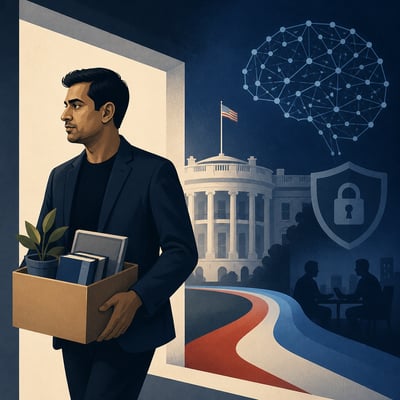
The White House is losing two senior AI policy officials, Sriram Krishnan and Thomas Lind, just as the Trump administration begins implementing a voluntary system for federal cybersecurity review of advanced AI models before public release. The transition follows efforts to expand government access to frontier models and disputes over how AI companies support classified military and national-security uses. The departures create questions about technical capacity and continuity, while the administration’s approach remains centered on voluntary measures intended to address security risks without imposing broad mandatory controls.
First Article: 06/06/26
Latest Article: 07/03/26
Summary
- Sriram Krishnan plans to leave the White House at the end of June and may continue technology-policy work outside government.
- Thomas Lind is also planning to depart the Office of the National Cyber Director shortly after helping develop the administration’s AI executive action.
- The executive order establishes a voluntary process for developers to submit advanced models for federal cybersecurity review roughly 30 days before release.
- Google, Microsoft, and xAI agreed to provide the government early access to models for capability and security evaluations.
- The administration is broadening access to multiple AI providers for national-security applications after its dispute with Anthropic.
- The simultaneous departures raise concerns about technical staffing, morale, and the federal government’s ability to execute the new review process.
History
The story now centers more tightly on implementation risk: a key White House AI adviser is leaving just as the administration formally launches its voluntary pre-release cybersecurity review process. It also adds new detail on government access arrangements and the Anthropic dispute, broadening the policy stakes beyond general oversight.
The story is now more clearly about a concrete implementation plan: the White House is moving from general voluntary oversight to a pre-release cybersecurity vetting process for frontier models, with agencies and developers being pulled into execution. At the same time, personnel turnover has become a more prominent concern because it could affect whether the policy is carried out consistently.
Featured
Timeline: 28 Days
Hover over any logo to see coverage summary, click for full article.