History
07/22/20261 new articles
The story now centers more tightly on implementation risk: a key White House AI adviser is leaving just as the administration formally launches its voluntary pre-release cybersecurity review process. It also adds new detail on government access arrangements and the Anthropic dispute, broadening the policy stakes beyond general oversight.
- Krishnan is expected to leave at the end of June.
- The executive order was signed on June 2.
- The review window is roughly 30 days before release.
- Google, Microsoft, and xAI reportedly agreed to early access.
- The administration is considering broader AI policy links to energy and equity stakes.
06/29/20260 new articles
The story is now more clearly about a concrete implementation plan: the White House is moving from general voluntary oversight to a pre-release cybersecurity vetting process for frontier models, with agencies and developers being pulled into execution. At the same time, personnel turnover has become a more prominent concern because it could affect whether the policy is carried out consistently.
06/11/20263 new articles
The story is no longer mainly about one adviser’s exit; it now centers on the White House formalizing a voluntary frontier-model security review regime and how that will be implemented amid staff turnover. The updated framing also adds agency-level execution details and a clearer emphasis on national-security screening over pure AI policy coordination.
- June 2 executive order launched the voluntary review process.
- ONCD will oversee the frontier-model safety vetting process.
- Thomas Lind is also leaving the AI policy implementation team.
- Agencies are being pushed to avoid single-vendor dependence.
- The White House is emphasizing voluntary, not mandatory, pre-release review.
06/07/2026Topic Formed
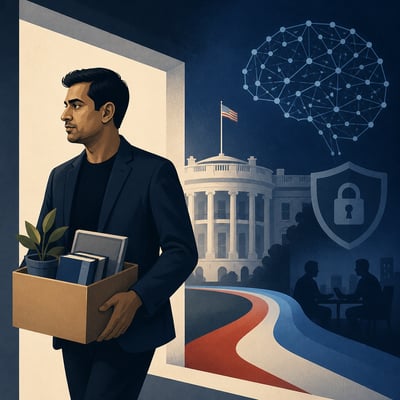
Sriram Krishnan is leaving his White House AI policy role after helping shape the Trump administration’s approach to frontier AI governance. His exit comes as the administration expands voluntary model security review, weighs deeper coordination with AI firms, and tries to balance innovation goals with national-security concerns.

 Climate
 Privacy
 Bob Dylan
 Drones
 Data Centers
 AI Governance
 2026 Maine Senate Race