
Last Update: 06/03/2026 at 6:50 AM EST
Arctic Groundwater and Peatland Climate Shifts
Coverage from EurekAlert!, Chemistry World, and others
Articles
5
Latest Article
06/01
Active Days
317
Executive Summary
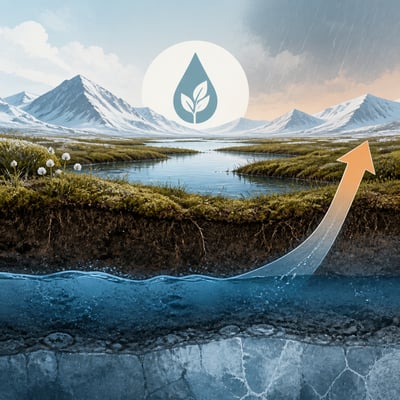
Recent research points to Arctic water tables as an active climate lever: rewetting peatlands can reduce net greenhouse gas emissions, while warming and rainfall shifts are likely to reshape shallow aquifers across the region.
Key Points
- Field measurements in Arctic peatlands show that raising groundwater levels can reduce CO2, methane, and nitrous oxide emissions overall.
- The climate benefit is conditional: temperature, fertiliser use, and harvest timing change whether rewetted land becomes a net sink or remains a source.
- Arctic shallow aquifers are expected to respond unevenly to warming and rainfall changes, with some areas becoming wetter and others developing deeper water tables.
- Coastal Arctic areas face added pressure from sea level rise and saltwater intrusion, which may alter groundwater quality and surface wetness.
- The evidence base combines direct field measurements with regional modeling, giving the topic a mixed empirical and projection-driven character.
- The topic is relatively coherent but still fragmented by scale, linking local management experiments with broad Arctic hydrology projections.
Featured Article
Researchers in Northern Norway during 2022-2023 demonstrate that rewetting Arctic peatlands lowers greenhouse gas emissions and can yield net carbon uptake.
Coverage Timeline: 317 Days
Hover over any logo to see coverage summary, click for full article.
Additional Articles
⭐⭐⭐⭐⭐
In Alaska's Brooks Range, a Communications Earth & Environment study attributes rust-colored river contamination to permafrost thaw-driven iron release with a seasonal lag and ecosystem impacts.
Canadian researchers report permafrost-melt acidification in the Yukon and Mackenzie basins, increasing toxic metal loads and accelerating water-quality decline since 2023.
Dalhousie researchers map Arctic shallow aquifers to show how warming summers and changing rainfall reshape groundwater and landscape wetness across the Arctic.
Researchers in Pasvik Valley, Norway, during 2022-2023, found that raising groundwater levels in drained Arctic peatlands reduced net greenhouse gas emissions.