
 Climate
 Privacy
 Bob Dylan
 Drones
 Data Centers
 AI Governance
 2026 Maine Senate Race
Last Update: 08/01/2026 at 2:00 PM EST
Blue Carbon Governance And Rights
Coverage from Nature, University of Central Florida, and others
Articles
6
Active Days
107
The Topic
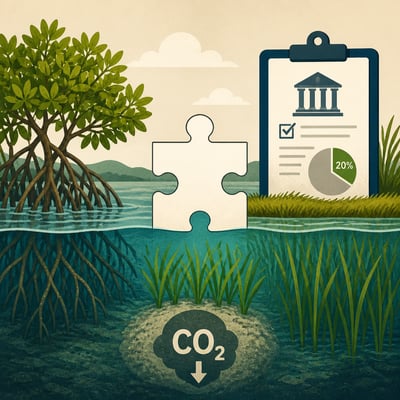
Blue carbon is moving from research and accounting toward implementation, but progress is constrained by weak national reporting, rights gaps, and tensions between climate finance and community control.
First Article: 03/24/26
Latest Article: 07/08/26
Summary
- Blue carbon ecosystems such as mangroves, seagrass, and salt marshes are gaining attention as climate mitigation assets and as habitats needing protection.
- A recurring bottleneck is low formal uptake: only about 20% of eligible countries include blue carbon in national climate reporting or inventories.
- Recent research emphasizes measurement, MRV, and governance gaps that limit scalable crediting and Paris-aligned accounting.
- Rights and tenure have become a major issue, with multiple sources warning that coastal communities and Indigenous peoples are often treated as project participants rather than rights holders.
- Blue economy and restoration finance are growing, including conference pledges and project models, but community participation and benefit-sharing remain contested.
- The topic is fairly coherent and structurally oriented, with most material pointing to the same implementation gap rather than unrelated subthreads.
History
The story has broadened from a research-and-reporting gap into a more implementation-focused policy and finance issue. The new emphasis is on rights, tenure, and contested benefit-sharing as blue carbon projects attract more ocean-finance and blue-economy attention.
Featured
06-05-2026
Review of 122 blue carbon guidance documents finds tenure rights are frequently handled narrowly, raising dispossession risks for coastal Indigenous peoples and small-scale fishers.
05-21-2026
Dr. Sergio Alvarez proposes green restoration tourism for coastal blue carbon ecosystems, combining sequestration projects, carbon credit markets, and tourism revenue financing.
03-24-2026
William Austin-led international researchers publish Nature Ecology & Evolution priority questions addressing gaps and limited national inventory inclusion for blue carbon conservation and restoration.
Timeline: 107 Days
Hover over any logo to see coverage summary, click for full article.
Additional Articles
⭐⭐⭐
Researchers report about 20% of eligible countries count blue carbon in climate reporting, limiting Paris Agreement incentives for mangrove and seagrass conservation.
Researchers including William Austin and Peter Macreadie published a Nature Ecology & Evolution roadmap in 2026 to address measurement and governance gaps for scaling blue carbon inclusion in national climate inventories.
During the Our Ocean Conference in Mombasa, civil society groups urged stronger safeguards and community governance for offshore wind, blue carbon, and marine projects to prevent coastal inequities and biodiversity harm.