
 Climate
 Privacy
 Bob Dylan
 Drones
 Data Centers
 AI Governance
 2026 Maine Senate Race
California Expands Climate Regulation
Coverage from Mavensnotebook, Forbes, and others
Articles
7
Active Days
129
The Topic
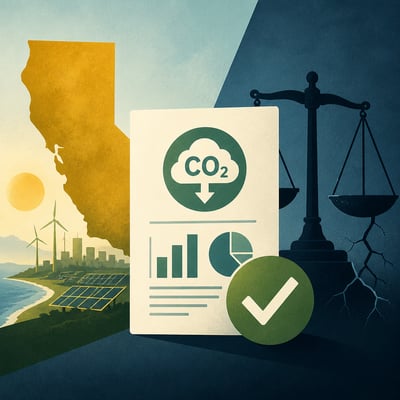
California is expanding its climate framework through emissions disclosure requirements, an updated cap-and-invest program, and new rules for carbon capture and storage. The changes give large businesses and emerging carbon-management projects clearer obligations, while litigation, federal policy reversals, and concerns about pipeline safety and fossil-fuel reliance create uncertainty. Implementation will affect corporate reporting, investment decisions, and the development of carbon-management projects in the state.
First Article: 02/26/26
Latest Article: 07/04/26
Summary
- CARB approved initial implementation rules for SB 253, requiring large companies doing business in California to report Scope 1 and Scope 2 emissions in 2026.
- SB 261 climate-risk disclosure requirements remain unenforced under a court injunction, while legal challenges to California’s disclosure laws continue.
- California extended and reshaped its cap-and-invest program through 2045, preserving a long-term emissions-pricing framework for major emitters.
- CARB is drafting the state’s first framework for permitting, monitoring, and financial responsibility across carbon capture, removal, utilization, and storage projects.
- Carbon TerraVault I began injecting captured carbon dioxide in Kern County, but the project faces litigation and environmental-justice concerns over storage integrity, pipelines, and emergency response.
- California’s climate rules are becoming more consequential as federal climate disclosure policy moves in the opposite direction.
History
The main change is a clearer, more concrete implementation picture: CARB has now approved initial SB 253 rules and the narrative adds specific enforcement and project-safety concerns around carbon capture. The story also reframes federal action as a sharper policy contrast, with California pressing ahead while Washington moves the other way.
California’s climate push has become more concretely operational: specific reporting deadlines, an injunction affecting part of the disclosure regime, and active carbon capture deployment now define the story. The addition of an operating storage project and the 2045 cap-and-invest extension make the state framework look more advanced and durable than before.
Featured
Timeline: 129 Days
Hover over any logo to see coverage summary, click for full article.