
 Climate
 Privacy
 Bob Dylan
 Drones
 Data Centers
 AI Governance
 2026 Maine Senate Race
California Reworks Water for Climate Extremes
Coverage from Los Angeles Times, Community Alliance, and others
Articles
8
Active Days
139
The Topic
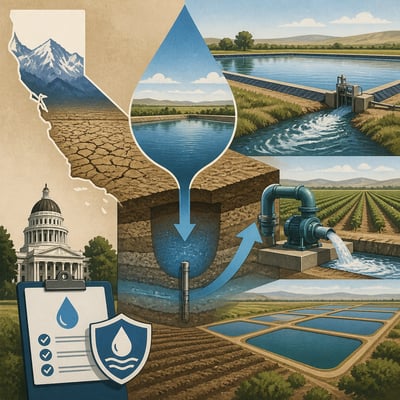
California is revising its water strategy for a warmer and more variable climate, combining conservation, wastewater recycling, stormwater capture, groundwater recharge, storage, and watershed management. At the same time, Gov. Gavin Newsom is advancing the proposed Delta Conveyance Project, while environmental groups and some water organizations argue that greater local supply would be more reliable and less damaging. The central policy tension is how to balance large conveyance infrastructure with distributed, locally controlled projects as imported water becomes less dependable.
First Article: 02/27/26
Latest Article: 07/15/26
Summary
- State officials project substantial water-supply losses by 2040 as snowpack declines and drought and flood conditions become more volatile.
- California’s updated water strategy emphasizes conservation, recycling, stormwater capture, storage, groundwater recharge, and watershed-scale data.
- Southern California groups are urging a rise in locally sourced water from about 50% today to 85% by 2045.
- Managed aquifer recharge is being used to store wet-year or stormwater supplies underground for later recovery during dry periods.
- Gov. Gavin Newsom is advancing the 45-mile Delta Conveyance Project despite legal, financing, ecosystem, and local opposition.
- The debate reflects a broader choice between centralized conveyance and a more distributed portfolio of local and watershed-based projects.
- Funding, permitting, ecosystem impacts, and the practical scale of proposed supply gains remain unresolved.
History
The story has shifted from a general California water-planning update to a more explicit policy contest over how much supply should come from centralized Delta conveyance versus locally controlled, climate-adaptation projects. The current version adds a concrete local-supply target and sharper framing around the Delta Conveyance Project’s cost, legality, and environmental tradeoffs.
The story has shifted from broad California water adaptation planning to a more specific policy fight over how conservation, local supply, and the Delta tunnel will be implemented. New emphasis falls on enforceable efficiency rules and a wider set of stakeholders, including the State Water Board and tribal groups.
Featured
Timeline: 139 Days
Hover over any logo to see coverage summary, click for full article.