
Last Update: 06/03/2026 at 1:25 PM EST
Climate Conflict And Resource Stress
Coverage from Salon.com, Climatemint, and others
Articles
9
Latest Article
05/20
Active Days
77
Executive Summary
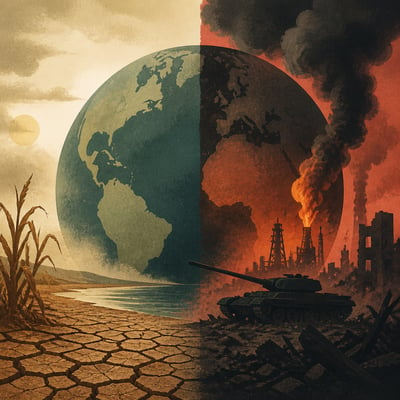
Recent coverage links climate stress, conflict, and infrastructure vulnerability across water, energy, food, and health systems. War is repeatedly described as both a climate accelerant through emissions and a multiplier of physical and social risk.
Key Points
- War and climate change are repeatedly treated as mutually reinforcing, with conflict increasing emissions and climate stress worsening insecurity.
- Water scarcity is a recurring pressure point, especially where drought, desalination, and damaged infrastructure threaten supply reliability.
- Energy systems appear vulnerable to both conflict damage and climate-driven stress, including fuel disruption, grid risk, and cooling-water limits.
- Food and health impacts remain central, with heat, drought, and disrupted livelihoods tied to malnutrition, disease burden, and rising vulnerability.
- Several pieces emphasize that resource scarcity can raise conflict risk, but governance and incentives shape whether tensions escalate.
- Adaptation is discussed mainly through resilience planning for coupled energy-water-food systems rather than through single-sector fixes.
- The strongest signal is structural rather than event-specific: long-run climate stress is interacting with war, infrastructure fragility, and policy capacity.
Featured Article
Water scarcity intensified by historic drought and shifting rainfall patterns is paired with toxic air contamination after petroleum strikes in Tehran, linking climate and conflict risks.
Coverage Timeline: 77 Days
Hover over any logo to see coverage summary, click for full article.
Additional Articles
⭐⭐⭐⭐⭐
In 2026 tensions involving Iran and US actions influenced oil markets and water resources in Tehran and Corpus Christi.
The newsletter links fossil-fuel driven conflicts involving Russia-Ukraine, Iran, and the United States to higher emissions and cites WMO energy-imbalance findings on ocean heat and heatwave risk.
⭐⭐⭐
World Bank-linked projections connect climate-driven resource scarcity to increased civil conflict risk via intensified competition and weakened rural livelihoods.
Global conflicts in early 2026 emit large CO2 worldwide, threatening climate stability and prompting calls for military emissions reporting.
WHO-cited climate hazard trends highlight rising heat, flood, and storm risks to global health, food and water security, with adaptation support described in Tanzania.
Militaries and governments in Iran in 2026 engage climate linked warfare with global energy and security implications.
Amid ongoing wars, a climate-focused commentary argues that long-term energy sustainability, global food-water security, and economic restructuring are needed to address climate harms.
Energy, water, and food systems resilience planning is challenged by conflict disruptions and climate-driven physical constraints affecting grids, water supplies, and crop yields.