
 Climate
 Privacy
 Bob Dylan
 Drones
 Data Centers
 AI Governance
 2026 Maine Senate Race
Climate Messaging And Political Divide
Coverage from Inside Climate News, The New York Times, and others
Articles
6
Active Days
143
The Topic
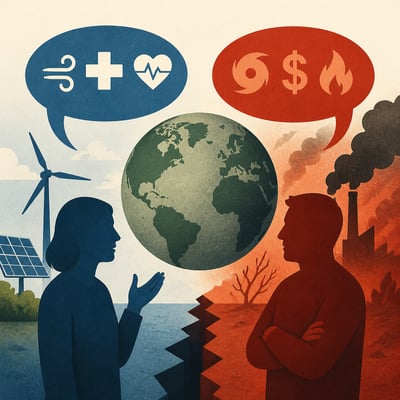
The material centers on how climate change is being discussed, framed, and politicized, especially in the United States. Multiple studies and commentary converge on the finding that plainspoken messages tied to pollution, health, costs, and extreme weather outperform technocratic or abstract terms like net zero and decarbonization. The set also reflects a broader political backdrop of federal climate rollbacks, declining climate visibility in media, and persistent partisan division over urgency and action.
First Article: 01/27/26
Latest Article: 06/18/26
Summary
- Plainspoken framing around pollution, health, affordability, and extreme-weather costs repeatedly outperforms abstract terms like net zero, decarbonization, and climate crisis.
- U.S. climate opinion remains sharply polarized, with Democrats expressing far more concern than Republicans and the partisan gap wider than in several peer democracies.
- Researchers find that messages emphasizing climate as solvable, local, and tied to everyday experience can increase support for action more effectively than bans, mandates, or disruption language.
- Collective-action experiments suggest people respond best when climate action is shown to have real impact and social benefits, not when it relies on guilt or anger.
- The communication debate sits against ongoing federal policy rollbacks, including reduced support for monitoring, wind power, and emissions controls.
- Media attention and public discourse around climate appear to be declining even as worry and belief in climate change remain relatively high.
- Several pieces argue that trusted messengers, pop culture, and shared values may reach audiences that climate-science framing does not.
History
This topic is new, but as new articles are added to it this area will summarize shifts, changes and expansions of the issues.
Featured
Timeline: 143 Days
Hover over any logo to see coverage summary, click for full article.