

Climate Misinformation And Extreme Cold
Coverage from Carbon Brief, Winter storm doesn't disprove climate change, and others
Articles
14
Latest Article
06/02
Active Days
131
Executive Summary
Recent coverage splits between repeated fact-checks of claims that winter cold disproves global warming and a smaller set of pieces disputing how climate projection scenarios such as RCP8.5 are described in political debate. Across both threads, scientists stress observed warming, weather-versus-climate distinctions, and the limits of using isolated cold events as evidence against long-term climate change. A smaller operational theme appears around winter resilience, including power outages, infrastructure stress, and the challenge of heating homes during severe cold. The topic is coherent but somewhat fragmented because it mixes science communication, political misinformation, and scenario-methodology disputes.
Key Points
- Cold snaps are being used in public debate to question global warming, and multiple outlets respond by restating the weather-versus-climate distinction.
- Scientists cited in the coverage rely on long-term temperature records, record-high versus record-low comparisons, and polar-vortex or jet-stream explanations to show that regional cold does not negate warming.
- A separate but related strand focuses on how climate scenarios are represented in politics, especially claims about RCP8.5 and what the IPCC does or does not produce.
- The scenario debate shows a recurring gap between scientific modeling practice and political messaging about future warming pathways.
- Some pieces connect extreme winter events to energy-system stress, outages, and the ability of households to heat homes during severe cold.
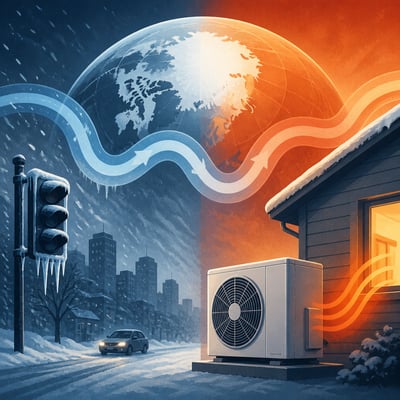
- Heat pump technology appears only peripherally: several articles explicitly note that they do not address it, while one consumer-facing piece argues modern cold-climate heat pumps work well below freezing.
- The cluster is more about climate communication and attribution than about policy implementation or infrastructure rollout, though resilience concerns remain visible.
Featured Article
Coverage Timeline: 131 Days
Hover over any logo to see coverage summary, click for full article.