
Last Update: 06/03/2026 at 5:25 AM EST
Texas Climate Impacts And Energy Strains
Coverage from Houston Public Media, Mongabay, and others
Articles
4
Latest Article
02/04
Active Days
216
Executive Summary
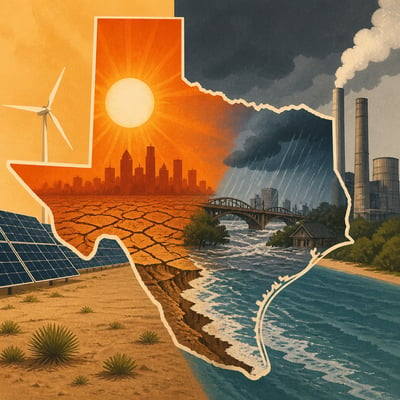
Texas climate reporting highlights recurring heat, flooding, sea-level rise, and winter warming, alongside stress on infrastructure, ecosystems, and energy policy choices.
Key Points
- Heat remains a dominant signal, with Houston reporting very high counts of hot days and broader Texas winters trending warmer.
- Flooding and rainfall intensity are a recurring concern, especially in the wake of major Texas storm events and coastal drainage pressure.
- Coastal change is material in southeast Texas, where sea-level rise, wetland stress, and oyster habitat disruption are visible adaptation concerns.
- Infrastructure strain appears in practical forms such as road buckling, burst pipes, and other heat-related damage.
- The topic also includes energy-system decisions, with solar growth, planned gas plants, and emissions-roadmap politics appearing alongside climate impacts.
- Ecological effects are persistent but secondary, including plant blooming shifts, tree stress, allergy timing changes, and broader habitat disruption.
- The coverage is coherent around Texas climate vulnerability, but it mixes physical impacts with policy and advocacy content rather than one narrow operational storyline.
Featured Article
Houston climate impact report 2026 highlights heat waves, heavy rain, and sea level rise with no heat pump discussion.
Coverage Timeline: 216 Days
Hover over any logo to see coverage summary, click for full article.
Additional Articles
⭐⭐⭐⭐⭐
Houston Public Media reports in February 2026 on Texas winter warming and plant impacts but does not address heat pump technologies or policies.
⭐⭐⭐
The 2025 climate disaster report by World Weather Attribution documents droughts in Syria, Kenya, Nepal and storms across the Caribbean and Asia in 2025, urging adaptation and fossil fuel transition.
Environment Texas's review of 2025 climate and energy developments in Texas omits discussion of heat pump technologies, instead detailing floods, solar growth, gas plant plans, and an emissions roadmap.