
 Climate
 Privacy
 Bob Dylan
 Drones
 Data Centers
 AI Governance
 2026 Maine Senate Race
Climate Change Raises Household Costs
Coverage from The Guardian, Earth.com, and others
Articles
16
Active Days
341
The Topic
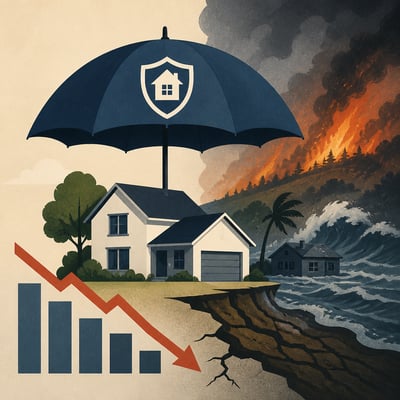
Climate change is making homes, water supplies, and insurance more costly and financially exposed. In the UK, hotter and drier conditions are increasing subsidence risk while flood and climate hazards are weighing on property values, lending, and insurance. In drought-prone US cities, costly supply projects could sharply raise water bills, with low-income households facing the greatest affordability pressures.
First Article: 08/21/25
Latest Article: 07/27/26
Summary
- Hotter, drier UK summers are expected to increase shrink-swell subsidence risk, particularly in London, Essex, Kent, and eastern England.
- UK flood and subsidence exposure is already affecting property values, rebuilding costs, mortgage portfolios, and insurer risk assessments.
- In Santa Cruz, California, climate-related supply pressures could nearly double typical household water bills by mid-century in some scenarios.
- Low-income households face disproportionate impacts because water and climate-related cost increases consume a larger share of their income.
- Insurers and lenders face greater uncertainty as traditional risk models become less reliable under intensifying and less predictable hazards.
- Property-level climate data can reveal concentrated exposures that broad regional averages may miss.
History
The story has narrowed and sharpened around two concrete affordability channels: worsening UK subsidence/flood impacts on housing finance, and rising water bills in drought-prone US cities. The current version adds more explicit emphasis on low-income household strain and on the limits of traditional risk models.
The story has broadened from climate risk showing up in housing and insurance to a wider, more operational pricing problem affecting utilities, mortgage portfolios, and municipal credit. The new material also adds more concrete modeling and market-analysis actors, strengthening the case that climate costs are now being translated into measurable financial terms.
Featured
Timeline: 341 Days
Hover over any logo to see coverage summary, click for full article.