
 Climate
 Privacy
 Bob Dylan
 Drones
 Data Centers
 AI Governance
 2026 Maine Senate Race
Colorado Heat Pump Electrification Push
Coverage from CBS News Colorado, City of Bellevue, and others
Articles
16
Active Days
179
The Topic
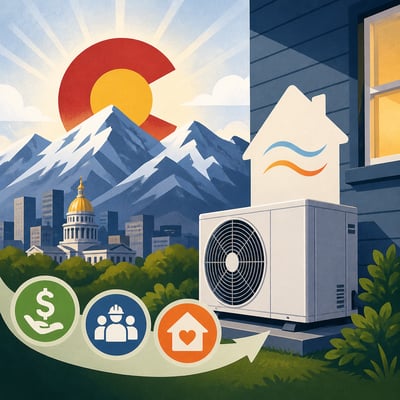
Colorado is expanding heat pump adoption through a mix of federal grant money, state rebates, utility programs, and local retrofit initiatives. The strongest signal is around building electrification paired with workforce training, with most activity aimed at lowering upfront costs, improving installer capacity, and reaching low-income households. Colorado also shows policy support through Clean Heat Plans, code updates, and utility proceedings, while some programs have had to downscale or replace expected federal funding with state support. The topic is coherent and fairly dense, with heat pumps as the stable core and equity plus implementation capacity as recurring constraints.
First Article: 01/01/00
Latest Article: 07/16/26
Summary
- Heat pump deployment is the dominant thread, especially in Colorado's Denver region and other local programs that replace gas heating with electric systems.
- Federal EPA and Inflation Reduction Act money still anchors much of the activity, but state and municipal funding is increasingly used to fill gaps or extend programs.
- Rebates, free retrofits, and stacked incentives are the main tools for lowering upfront costs and expanding adoption among low- and moderate-income households.
- Workforce development is a major companion theme, with repeated attention to HVAC training, installer shortages, and certification pipelines.
- Clean Heat Plans and utility proceedings show building electrification becoming embedded in Colorado regulatory processes, not just pilot programs.
- Several programs link heat pumps to heat resilience as well as emissions cuts, especially in neighborhoods facing summer heat stress.
- The cluster is geographically concentrated in Colorado, but includes a few Washington and New Mexico examples that reinforce the same policy-and-program model.
History
Colorado's heat pump story now looks more explicitly regulatory and geographically broadened. The new version adds utility commission involvement and Clean Heat Plans as formal policy channels, while also showing that some federal-driven efforts are being supplemented by state and municipal funding and echoed by a few out-of-state examples.
Featured
Timeline: 179 Days
Hover over any logo to see coverage summary, click for full article.