History
07/23/20260 new articles
The story now emphasizes specific partial responses and a stalled tribal settlement, while the core basin-wide shortage and allocation fight remain unchanged. The framing has shifted from broad crisis management to a narrower focus on unresolved negotiations and piecemeal adaptation.
07/23/20265 new articles
The story has shifted from a general drought-and-negotiation warning to an active shortage-management crisis, with federal intervention and immediate operational adjustments now more central. It also broadens beyond reservoirs and cuts to include structural climate-driven decline, hydropower thresholds, and adaptation by cities and operators.
- Reservoir storage has reached record or near-record lows.
- Old operating guidelines are expiring, forcing federal intervention planning.
- Climate-driven flow declines are now treated as structural.
- Rights-of-nature tools are emerging in basin stewardship.
- Marina and infrastructure adjustments are being implemented for low-water conditions.
07/20/20264 new articles
The story has shifted from a broad basin shortage and negotiation stalemate to a more explicit expectation of federal backstop action if states miss deadlines. It also now foregrounds a wider set of adaptation tools, especially reuse, desalination-linked transfers, and water-rights trading.
06/19/20263 new articles
The story broadens from a basin-wide shortage and stalled negotiations to a more operationally specific picture, with named water districts, dams, and adaptation tools now in active focus. It also adds a stronger emphasis on hydropower, infrastructure risk, and tribal/legal contestation.
06/08/20263 new articles
The main change is that the basin’s stalemate has become more operational: federal officials are now preparing a fallback framework for 2027 rules if states miss deadlines. The story also tilts more toward agricultural adaptation, with cutbacks and low-water crop trials emerging alongside conservation and trading.
06/04/20263 new articles
The story has shifted from a broad shortage-and-conservation narrative to a more immediate reservoir-risk and operational-management story, with hydropower and operating thresholds now foregrounded. It also adds concrete evidence of active interstate trading and supply-side responses, but the basin remains structurally unresolved.
- Lake Mead and Lake Powell could fall below operating thresholds.
- Hydropower and dam operations face direct risk.
- First major interstate water-rights swap is described.
- San Diego County Water Authority enters the story.
- Responses are becoming more operational, though still constrained.
05/17/2026Topic Formed
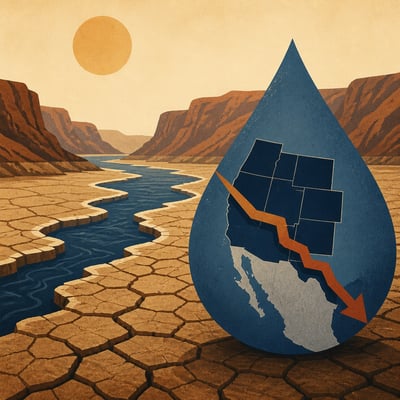
Colorado River water stress is intensifying as low snowpack, warming, and long-running drought reduce supplies faster than conservation can compensate. Basin states are still split over mandatory cutbacks, while cities and water managers push reuse, desalination, and other adaptation measures.

 Climate
 Privacy
 Bob Dylan
 Drones
 Data Centers
 AI Governance
 2026 Maine Senate Race