History
07/23/20260 new articles
The story now adds a more specific implementation detail: EPA’s rollback is described as preserving two-year monitoring exemptions for 47 plants. The framing also broadens slightly from a mercury-rule repeal to a broader package of weakened coal pollution and coal-ash protections.
07/22/20260 new articles
The story now centers more explicitly on finalized federal rollbacks: EPA has fully repealed the tougher 2024 air-toxics rule and paired it with a separate coal-ash weakening proposal. The current version adds clearer emphasis on monitoring cuts, state-led implementation, and the expansion of the rollback to oil-fired plants and inactive coal-ash sites.
- EPA has fully repealed the tighter 2024 standards.
- Continuous emissions monitoring is being removed or weakened.
- Coal-ash safeguards now cover inactive sites too.
- Lee Zeldin is associated with the rollback.
- A public hearing occurred in spring 2026.
07/22/20260 new articles
The story is now framed more broadly as a push to extend coal generation and weaken not just emissions limits but also coal-ash oversight. The current version also more explicitly centers the administration’s cost-and-reliability rationale against public-health groups’ concerns about localized pollution and groundwater risk.
07/22/20261 new articles
The story now shifts from a general EPA rollback of coal-plant pollution rules to a more specific, broader regulatory package that includes a formal repeal of tightened MATS requirements and a related coal-ash weakening proposal. The current version also adds a clearer policy clash over cost savings versus localized health harms and legal scrutiny.
05/19/20260 new articles
The story is still the same EPA coal-rollbacks arc, but the current version sharpens it into a more specific and broader regulatory retreat: not just mercury limits, but emissions monitoring and coal ash protections are explicitly being weakened too. It also adds stronger detail on the administration’s cost rationale and frames the changes as affecting air and water safeguards together.
05/11/2026Topic Formed
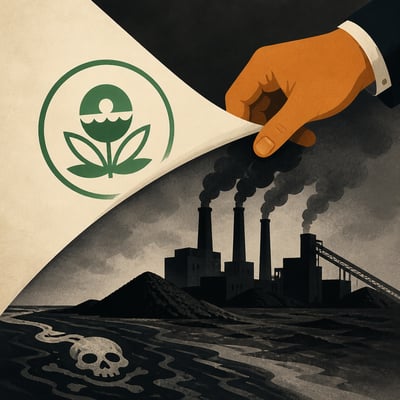
The cluster centers on a Trump-era EPA rollback of coal-related pollution controls, especially mercury and toxic air standards and coal ash disposal safeguards. The dominant signal is regulatory easing justified by cost and reliability arguments, with recurring counterclaims about health, environmental, and climate harms. The cluster is currently coherent and policy-driven, with some historical context around prior rule tightening and past coal ash failures.

 Climate
 Privacy
 Bob Dylan
 Drones
 Data Centers
 AI Governance
 2026 Maine Senate Race