
 Climate
 Privacy
 Bob Dylan
 Drones
 Data Centers
 AI Governance
 2026 Maine Senate Race
Trump Administration Backs Coal Power
Coverage from Inside Climate News, Grist, and others
Articles
18
Active Days
164
The Topic
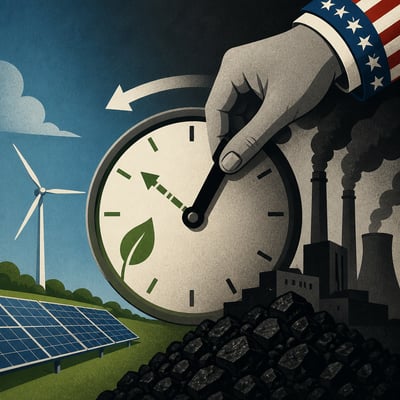
The Trump administration is using emergency and defense-related authorities to keep aging coal plants operating, fund coal facilities and mines, support new coal projects, and reverse some emissions-related restrictions. Officials frame the measures as necessary for grid reliability and rising electricity demand, including demand from data centers and artificial intelligence. Critics and legal scholars argue that the policy may increase electricity costs, prolong pollution and health risks, disrupt utility planning, and slow the transition toward lower-emission energy sources.
First Article: 01/09/26
Latest Article: 06/21/26
Summary
- Emergency orders have blocked or delayed planned retirements at several coal plants, including facilities in Michigan, Indiana, Colorado, and Wyoming.
- The administration announced nearly $700 million in support for coal plants, mines, new plants, and a proposed export terminal.
- Officials link continued coal generation to grid reliability and rising demand from data centers and artificial intelligence.
- Utilities and ratepayers may bear higher costs when aging, comparatively expensive plants remain open; one Michigan extension reportedly cost customers $135 million.
- Health experts and environmental groups warn that prolonged coal operations will sustain fine-particle, mercury, sulfur dioxide, nitrogen oxide, and greenhouse-gas pollution.
- The policy is being challenged in court and conflicts with state-level retirement plans and renewable-electricity goals.
- Coal remains in long-term decline as a share of U.S. energy use despite the administration's support, with natural gas and renewables competing strongly with it.
History
The story now emphasizes that the administration is not just extending coal-plant lifetimes but also backing mines, new coal projects, and rolling back emissions constraints. It also adds a stronger emphasis on legal conflict and the broader industry context that coal remains in structural decline despite federal support.
The story has shifted from a broad policy reversal toward a more concrete account of how federal emergency and defense authorities are being used to keep specific coal plants running, restart facilities, and finance new coal-related projects. It also adds clearer evidence of costs, delays, and legal challenges tied to those interventions.
Featured
Timeline: 164 Days
Hover over any logo to see coverage summary, click for full article.