
 Climate
 Privacy
 Bob Dylan
 Drones
 Data Centers
 AI Governance
 2026 Maine Senate Race
Europe Energy Security and Renewables
Coverage from Reuters, The New York Times, and others
Articles
32
Active Days
95
The Topic
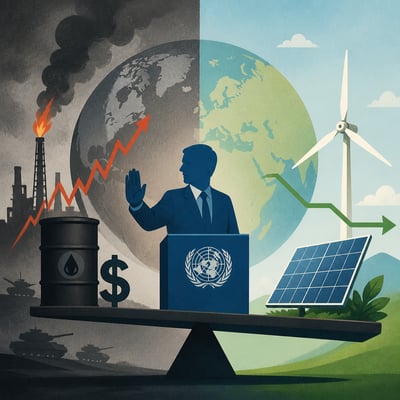
Recent material consistently links Europe’s fossil-fuel dependence to price volatility and energy-security risk, while presenting wind, solar, storage, and grid upgrades as the main response. Spain is the clearest example, with lower gas dependence and falling household bills used to support the case for deeper electrification and faster clean-power buildout. The topic is coherent and fairly dense, with a strong current-policy and market signal and limited fragmentation.
First Article: 03/16/26
Latest Article: 06/18/26
Summary
- The dominant pattern is a policy and market argument that imported oil and gas expose Europe to geopolitical shocks and volatile prices.
- Wind and solar are repeatedly presented as reducing wholesale power prices, import bills, and dependence on gas-set electricity pricing.
- Spain is the strongest recurring case study: higher renewable output, lower gas influence, and falling household bills are used as evidence for the transition argument.
- Grid flexibility, storage, transmission, and curtailment management emerge as the main implementation constraints as renewable shares rise.
- Several pieces emphasize that lower fossil-fuel exposure can improve both energy security and public-finance outcomes through reduced import spending.
- Modeling and analysis reinforce the policy case for faster net-zero timing, but the evidence is still concentrated in Europe and in power-sector economics.
- Retail electricity prices are more fragmented than wholesale prices, because taxes, levies, and network costs often blunt the effect of cheaper generation.
History
The story has narrowed and strengthened around Spain as the clearest proof point, with renewable output and lower gas dependence now used to argue more concretely for deeper electrification and faster clean-power buildout. The broader European framing is still intact, but the current version puts more weight on implementation constraints and the household-bill impact of the transition.
The story now places more emphasis on fossil-fuel import dependence as a structural vulnerability and adds fresh support that renewables have already generated sizable import-cost savings. It also sharpens the policy debate by showing disagreement over how to balance climate targets against near-term energy costs.
Featured
Timeline: 95 Days
Hover over any logo to see coverage summary, click for full article.