
 Climate
 Privacy
 Bob Dylan
 Drones
 Data Centers
 AI Governance
 2026 Maine Senate Race
Oil Shocks Accelerate Clean Energy Shift
Coverage from Grist, World Economic Forum, and others
Articles
22
Active Days
217
The Topic
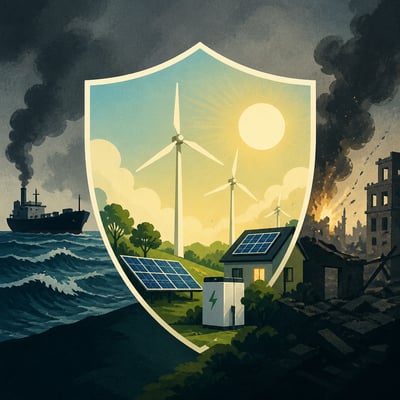
Energy-market disruptions and high oil prices are strengthening the case for electrification, renewable power, batteries, and other alternatives to imported fossil fuels. The shift is increasingly framed around affordability, energy security, industrial competitiveness, and resilience rather than climate commitments alone. China remains a leading clean-technology supplier, while governments and grid planners face growing pressure to expand reliable electricity systems that can handle climate extremes and new demand from electric transport and data centers.
First Article: 12/12/25
Latest Article: 07/16/26
Summary
- Higher oil and gas prices are reducing fuel demand in some markets and increasing interest in electric vehicles, transit, and other substitutes.
- Solar, wind, batteries, and electrification are increasingly treated as tools for energy security and lower exposure to imported fossil fuels.
- China retains a leading position across solar, batteries, wind, and electric-vehicle supply chains, while India, Europe, and the Americas seek greater domestic capacity.
- Electricity demand is expected to rise sharply from transport, data centers, and broader electrification, increasing the importance of storage, flexibility, and grid connections.
- Climate-informed siting can improve grid resilience by accounting for future weather conditions, compound events, demand patterns, and transmission constraints.
- The durability of behavior changes caused by high fuel prices remains uncertain if oil prices decline or supply conditions normalize.
History
The story is reframed less as a climate-driven transition and more as a resilience-and-competitiveness response to fossil-fuel volatility. The current version also places greater emphasis on climate-resilient grid planning and the specific demand pressures from data centers and electrification.
The story shifts from mainly a resilience-and-grid-reliability narrative to a broader competition story, where energy shocks are also accelerating electrification while intensifying the race over clean-technology manufacturing and supply chains. It now places China, India, the EU, and the U.S. more centrally as industrial and geopolitical actors, not just power-system adapters.
Featured
Timeline: 217 Days
Hover over any logo to see coverage summary, click for full article.