
Last Update: 06/03/2026 at 4:25 AM EST
Hajj Heat Risk Intensifies
Coverage from Inside Climate News, Yale E360, and others
Articles
7
Latest Article
06/02
Active Days
6
Executive Summary
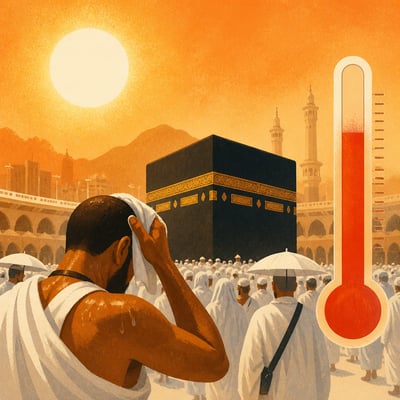
Climate change is making Hajj in Mecca hotter and more dangerous by extending extreme heat into months that were previously cooler. A new World Weather Attribution study says the safe seasonal window for the pilgrimage is shrinking as May temperatures increasingly resemble summer conditions from past decades. The issue matters because Hajj is a major open-air religious gathering, and recent heat-related deaths have already pushed Saudi authorities to expand cooling and other protections.
Key Points
- World Weather Attribution says warming is narrowing the period when Hajj can occur under safer temperatures in Mecca.
- May conditions in Mecca are now described as resembling summer temperatures from past decades, with average highs above 32C increasingly likely.
- The Islamic lunar calendar shifts Hajj about 11 days earlier each Gregorian year, moving the pilgrimage through hotter and cooler seasons over time.
- Recent Hajj seasons have repeatedly faced temperatures above 40C, with the 2024 pilgrimage described as especially deadly in extreme heat.
- Saudi authorities have responded with expanded cooling and anti-heat measures, especially large-scale air conditioning.
- Researchers say the seasonal respite from the calendar shift will not offset the underlying warming trend.
- Prior research projects that Hajj heat stress could again reach extreme-danger levels later this century.
Featured Article
World Weather Attribution links climate change to hotter Mecca temperatures, shrinking safe Hajj conditions as the pilgrimage shifts earlier in the Gregorian calendar.
Coverage Timeline: 6 Days
Hover over any logo to see coverage summary, click for full article.
Additional Articles
⭐⭐⭐⭐⭐
World Weather Attribution analysis suggests climate change is increasing Mecca heat risk for Hajj, potentially reducing heat-safe pilgrimage windows.
World Weather Attribution analysis links human-caused warming to more frequent May extreme heat in Mecca, raising health risks for hajj pilgrims in Saudi Arabia.
World Weather Attribution warned that human-caused warming is increasing extreme heat and heat illness risk for Hajj pilgrims in Mecca, Saudi Arabia.
⭐⭐⭐
Heat risk for Hajj pilgrims in Mecca increases as fossil-fuel-driven warming shifts extreme temperatures into May, according to new analysis.
World Weather Attribution reports climate change is making Mecca May temperatures more extreme, shrinking safe conditions for hajj in Saudi Arabia.
World Weather Attribution reports climate change is pushing Mecca May temperatures toward summer levels, narrowing safe conditions for the Haj in Saudi Arabia.