History
07/23/20260 new articles
The story now adds that EV consumer spending has fallen sharply after the $7,500 federal credit ended, broadening the impact beyond solar and batteries. It also tightens the framing around financing adaptation and clarifies that California and Florida remain exceptions to the national solar downturn.
07/22/20260 new articles
The story has sharpened from a broad post-credit adjustment into a more specific market divergence: rooftop solar, batteries, and EV demand are weakening sharply, while heat pumps remain comparatively resilient and home-energy value is showing up in resale data. The current version also adds clearer evidence of industry restructuring and state-level divergence, especially in California and Florida.
- Residential solar installations are projected to fall to a five-year low.
- Solar installers and suppliers are cutting jobs and entering bankruptcy.
- Home battery additions are projected to decline.
- Heat pump sales exceeded gas furnace sales in early 2026.
- California and Florida may avoid the national solar decline.
07/20/20264 new articles
The story broadens from a mainly U.S. incentive-rolloff narrative into a more mixed transatlantic picture: U.S. solar is slowing, but heat pumps look comparatively resilient, while UK and provincial programs add new policy support and grid-management angles. The framing also shifts toward financing adaptation and household-cost constraints rather than just subsidy expiration.
06/19/20263 new articles
The story now places more emphasis on the post-tax-credit U.S. market outlook, adding a sharper forecast of weaker 2026 demand and a new housing-value angle that suggests electrification can still pay off in some markets. The UK supportive-policy thread remains, but the U.S. side is now framed more explicitly around financing adaptation and modest, uneven cost pressure rather than a broad demand collapse.
05/30/20261 new articles
The story now places more emphasis on market fallout in the U.S., not just higher costs: rooftop solar installers are reportedly cutting jobs and restructuring as demand slows. It also adds more concrete implementation detail on the UK side and on financing mechanisms that are keeping adoption moving despite weaker U.S. incentives.
05/12/2026Topic Formed
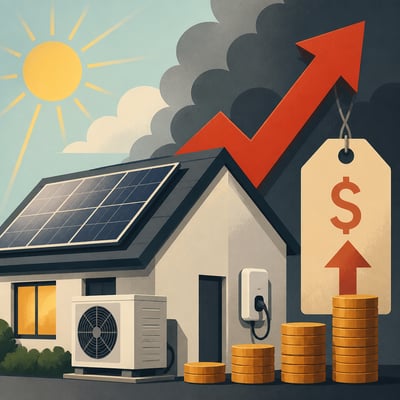
Recent coverage shows residential solar and heat pump economics shifting as federal incentives expire, tariffs and domestic-content rules raise costs, and installers move toward lease-to-own and third-party ownership models. UK and state-level programs still support adoption, but policy changes are making affordability and financing more uneven.

 Climate
 Privacy
 Bob Dylan
 Drones
 Data Centers
 AI Governance
 2026 Maine Senate Race