

Last Update: 06/03/2026 at 4:25 AM EST
India And South Asia Heat Risk
Coverage from The Guardian, Inside Climate News, and others
Articles
19
Latest Article
06/02
Active Days
107
Executive Summary
India and nearby South Asian countries are facing more frequent, earlier, and more intense heatwaves that are driving health harms, labor losses, power demand spikes, and water stress. Attribution studies and meteorological data increasingly link these events to human-caused warming, while adaptation systems remain uneven and often inadequate.
Key Points
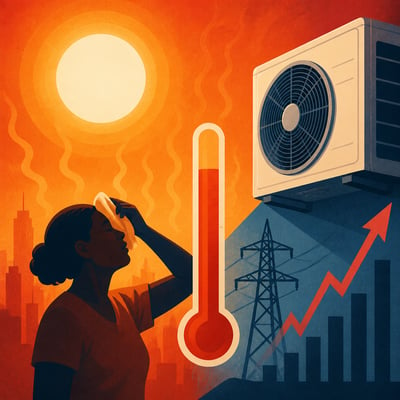
- Extreme heat in India and South Asia is recurring across multiple months, with several events reaching above 45C and some locations nearing 50C.
- Observed trends point to longer, more frequent, and more humid heatwaves, with rising nighttime temperatures adding stress after sunset.
- Attribution studies repeatedly connect recent heatwaves to human-caused climate change, with some events judged several times more likely in the current climate.
- The main impacts are health burdens, lost labor capacity, dehydration and heat illness, crop and livestock stress, and elevated mortality risk.
- Electricity systems are under pressure from rising cooling demand, with record or near-record peak demand, outages, and concerns about coal-backed load growth.
- Adaptation remains fragmented: heat action plans, cooling centers, warning systems, and mortality tracking are described as incomplete or unevenly targeted.
- Renewable energy, distributed solar, batteries, and grid upgrades appear in the material as practical responses, but heat also affects their performance and deployment.
Featured Article
Harvard University research links India\u2019s worsening extreme heat in late April to health and labor risks and warns that cooling demand can raise coal-fired electricity.
Coverage Timeline: 107 Days
Hover over any logo to see coverage summary, click for full article.
Additional Articles
⭐⭐⭐⭐⭐
Karachi, Pakistan recorded a 44.1C maximum in early May as a heatwave across Pakistan and India increased health risks and strained water and electricity supplies.
Meteorological agencies and scientists report a deadly South Asia heatwave in India, Pakistan, and Bangladesh during April 2024, intensified by climate-linked extreme heat and El Nino-like patterns.
World Weather Attribution researchers reported a late-April South Asia heatwave became about three times more likely due to human-caused warming, with deaths in India and Karachi in May.
Delhi and other Indian regions faced record heat in March 2025 with temperatures reaching 40 C.
World Weather Attribution assessed an April 15-29, 2026 pre-monsoon heatwave in India and Pakistan as about three times more likely and about 1 C hotter due to climate change.
In Delhi and Punjab, dairy farmers respond to extreme heat that reduces cattle milk yield and fertility through cooling investments, heat-tolerant breeding, and parametric livestock insurance.
Meteorologists report unusual March heat in India during 2025, including Delhi, Mumbai, and Ahmedabad.
During a May heatwave, the UK, France, Portugal, and Italy reported record temperatures and deaths, while India’s heatwave fatalities and power cuts were linked to extreme heat and high electricity demand.
India experiences severe heatwaves, with developing El Niño and declining Himalayan snowpack raising risks to monsoon rainfall, water supplies, and agriculture during May-June.
University of Oxford researchers project rising extreme heat exposure for 41% of people by 2050, driving cooling energy demand and economic risks across India, Nigeria and other developing countries.
India experiences record heat and rising risk from 2024 to 2026 across urban and rural regions.
A 2020 India Meteorological Department analysis links rising heatwave frequency, duration, humidity, and nighttime temperatures in India to escalating health, labor, and electricity-demand risks.
⭐⭐⭐
UNFCCC chief Simon Stiell warned extreme heat in northern and central India is intensifying with climate change as electricity demand hits record levels.
Scientists connect India heat wave escalation to human-caused warming and note renewable solar plus storage and grid upgrades to improve cooling reliability during outages.
India experienced extreme heat in late April, with 46.9C in Akola and criticized data and governance on heat deaths and protection.
In India, heatwaves above 45 C are driving city heat action measures such as cool roofs, shaded relief centers, and evaporative cooling gear for outdoor workers.
June 2021 Pacific Northwest heat dome in British Columbia caused record temperatures, more than 600 deaths, and health risks tied to ozone formation and overheating.
Heatwaves across Delhi, Jaipur, Nagpur, and Ahmedabad increase summer electricity demand while extreme heat reduces rooftop solar PV efficiency and stresses inverters and batteries.