
 Climate
 Privacy
 Bob Dylan
 Drones
 Data Centers
 AI Governance
 2026 Maine Senate Race
New England Offshore Wind Supports Grid
Coverage from Sierra Club, CommonWealth Beacon, and others
Articles
10
Active Days
166
The Topic
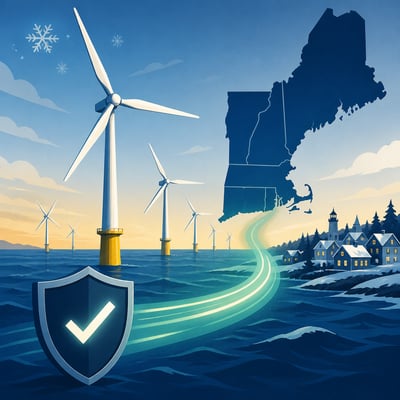
Offshore wind projects serving New England are beginning to support the grid during both winter cold snaps and summer heat, reducing reliance on oil and natural gas during periods of high demand. Vineyard Wind, Revolution Wind, and South Fork Wind are supplying power or moving toward full operation, while analyses indicate that a larger offshore fleet could improve reliability and reduce exposure to volatile fuel costs. Progress remains uneven, as Vineyard Wind operates below expected capacity, the NECEC transmission line has experienced outages, and federal, legal, and technical delays are slowing additional clean-power deployment.
First Article: 02/04/26
Latest Article: 07/19/26
Summary
- Offshore wind contributed during the July 2026 heat wave, when New England used less oil-fired generation than during a comparable 2025 heat event.
- Vineyard Wind and Revolution Wind are supplying electricity as they complete commissioning, while South Fork Wind has delivered power consistently to Long Island.
- Winter-focused analyses find that additional offshore wind could substantially lower modeled demand-driven outage risk and reduce reliance on imported liquefied natural gas.
- Vineyard Wind has operated below expected capacity while in litigation with GE Vernova.
- The NECEC transmission line delivered no power to New England for roughly two weeks because of technical problems and repairs.
- Clean-power disruptions can increase reliance on natural gas and oil, complicating emissions goals even though grid officials report no immediate reliability emergency.
- Massachusetts expects long-term Vineyard Wind contracts to lower customer electricity costs, though some savings figures come from project or advocacy-group estimates.
History
The story now has a more concrete operational update: offshore wind is being tied to a specific July 2026 heat wave, while the main constraints are more clearly identified as Vineyard Wind underperformance, NECEC outages, and continued delays. The framing also shifts from general reliability support to quantified claims about reduced outage risk and LNG reliance.
The story now places much more emphasis on infrastructure limits and execution risk, not just the benefits of offshore wind. New details point to transmission bottlenecks, project underperformance, outages, litigation, and federal delays as active constraints on the region’s offshore-wind buildout.
Featured
Timeline: 166 Days
Hover over any logo to see coverage summary, click for full article.