
 Climate
 Privacy
 Bob Dylan
 Drones
 Data Centers
 AI Governance
 2026 Maine Senate Race
New Mexico Expands Clean Energy, Faces Pushback
Coverage from Utility Dive, Clean Air Task Force, and others
Articles
9
Active Days
151
The Topic
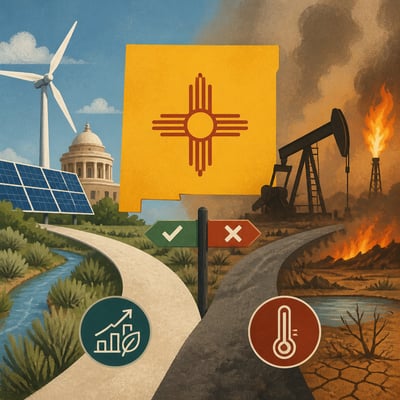
New Mexico is expanding renewable power, storage, transmission, and clean-energy programs while utilities also plan substantial new gas generation to meet rising electricity demand. State funding and policy initiatives are advancing grid modernization and clean-energy investment, but efforts to codify greenhouse-gas reductions have faced legislative defeat and organized opposition from oil and gas interests and allied business groups. The direction of the transition will affect reliability, ratepayer costs, emissions reductions, rural and tribal communities, and the state’s exposure to climate-related damage.
First Article: 01/19/26
Latest Article: 06/18/26
Summary
- Regulators approved Southwestern Public Service’s approximately $9.4 billion plan for gas, wind, solar, batteries, and transmission in eastern New Mexico.
- The utility expects summer peak demand to rise about 40% by 2030, citing data centers, manufacturing, and Permian Basin electrification.
- New Mexico reported that renewables supplied 52% of utility electricity as of November 2025, exceeding the state’s 2030 interim target.
- State appropriations support geothermal development, grid modernization, industrial decarbonization, emissions-data systems, and community clean-energy loans.
- A proposed law to codify statewide greenhouse-gas reduction targets failed in the Senate after opposition from oil and gas groups, utilities, and allied organizations.
- Carbon offsets and carbon-capture projects remain a central point of disagreement over how emissions goals should be met.
- Reported wildfire, drought, water-supply, and infrastructure costs are increasing pressure for resilience spending and climate action.
History
The main update is a sharper emphasis on near-term demand pressure and the policy battle around emissions rules. New Mexico’s clean-energy buildout remains intact, but the revised version adds stronger evidence that load growth is accelerating and that opposition is now explicitly centered on oil and gas and allied groups.
The biggest change is that New Mexico’s transition now clearly includes substantial new gas buildout alongside clean energy, driven by surging demand from data centers, manufacturing, and Permian electrification. The policy story also sharpened around carbon offsets, which have become a central compromise issue after greenhouse-gas targets again failed to advance.
Featured
Timeline: 151 Days
Hover over any logo to see coverage summary, click for full article.