
 Climate
 Privacy
 Bob Dylan
 Drones
 Data Centers
 AI Governance
 2026 Maine Senate Race
New York Battery Storage And Nuclear Buildout
Coverage from Newsday, Governor of New York, and others
Articles
21
Active Days
133
The Topic
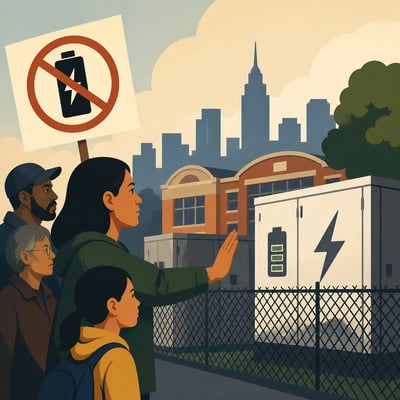
New York is pushing two parallel clean-power tracks: rapid battery and solar expansion to support grid reliability, and a new advanced-nuclear planning effort. The strongest friction points are local battery moratoriums, interconnection costs, fire-safety rules, and siting disputes, especially around New York City and upstate communities.
First Article: 02/26/26
Latest Article: 07/08/26
Summary
- Battery storage remains the most contested part of New York's clean-power buildout, with many projects delayed by moratoriums, zoning fights, and fire-safety concerns.
- Con Edison interconnection pricing and utility cost allocation are major bottlenecks for New York City battery projects, with developers warning that some projects are being stalled or canceled.
- State and local governments are tightening battery safety and permitting rules, but those changes have not eliminated opposition at the municipal level.
- Distributed and community solar continue to expand and are producing measurable grid effects, including lower midday demand and stronger peak-hour value.
- New York is also moving into advanced nuclear planning, with regulators considering subsidies, procurement tools, and a new reliability framework for future reactors.
- The topic is coherent but policy-fragmented: the same state is simultaneously accelerating clean energy deployment and confronting regulatory resistance, especially around batteries.
- The signal is dense and ongoing rather than short-term, because the same deployment, safety, and governance conflicts recur across multiple regions and project types.
History
The story has broadened beyond battery-storage conflict to include distributed solar gains and a new advanced-nuclear policy track. That shifts the frame from a single infrastructure bottleneck to a more fragmented statewide clean-power agenda with multiple parallel fights.
The story has sharpened from a general struggle over battery storage and nuclear planning into a more specific account of how New York’s storage buildout is being fragmented by local moratoriums, safety rules, and utility interconnection costs. The new version puts greater emphasis on execution delays and separate project tracks in different parts of the state.
Featured
Timeline: 133 Days
Hover over any logo to see coverage summary, click for full article.