
 Climate
 Privacy
 Bob Dylan
 Drones
 Data Centers
 AI Governance
 2026 Maine Senate Race
New York Solar Land Use Conflicts
Coverage from Nature, ScienceDirect, and others
Articles
15
Active Days
184
The Topic
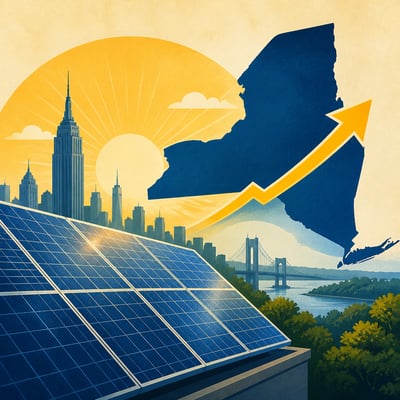
New York is expanding solar generation through utility-scale projects, distributed installations, and proposed incentives, but the buildout is intensifying disputes over farmland, forests, ecological effects, and local control. Upstate projects can provide important income for financially pressured farmers while also changing rural landscapes and creating concerns about long-term land restoration and state preemption of local rules. Policymakers are also weighing affordability, grid capacity, battery safety, and the emissions effects of greater renewable variability as solar deployment grows.
First Article: 01/30/26
Latest Article: 08/01/26
Summary
- Utility-scale solar is reshaping rural land use in Cortland, Montgomery, and other upstate counties, often involving previously agricultural land.
- Farmers may use solar leases to stabilize or reinvest in struggling operations, but residents and agricultural groups warn about landscape loss and the difficulty of restoring productive farmland.
- State-level renewable siting rules can override local requirements when they are deemed unreasonably burdensome, prompting county appeals and lawsuits over home-rule authority.
- Proposed legislation would increase New York’s distributed-solar goal and expand the homeowner tax credit, but the measures remain subject to budget and legislative decisions.
- Solar siting involves tradeoffs among electricity generation, farmland, forests, wetlands, wildlife habitat, and carbon storage; agrivoltaics, ecovoltaics, and floating solar are identified as possible co-use approaches.
- Research using NYISO generator data and EPA records is developing 2030 emissions scenarios to assess how renewable variability may affect operational planning.
History
The story now emphasizes concrete state siting disputes and policy mechanics more than broad land-use concerns, with Montgomery County and lawsuits highlighting how state rules can override local requirements. It also adds a clearer policy and operational layer: proposed solar incentives remain unsettled, and grid-affordability-battery considerations are now part of the debate.
The story has shifted from a broad solar-and-storage policy conflict to a more specific account of New York’s upstate land-use impacts and the policy tools being considered to manage them. It now places greater emphasis on farmland conversion, county-state authority disputes, and planning methods such as emissions forecasting and land-sharing solar designs.
Featured
Timeline: 184 Days
Hover over any logo to see coverage summary, click for full article.