
 Climate
 Privacy
 Bob Dylan
 Drones
 Data Centers
 AI Governance
 2026 Maine Senate Race
New York Delays Climate Targets
Coverage from The New York Times, Inside Climate News, and others
Articles
23
Active Days
154
The Topic
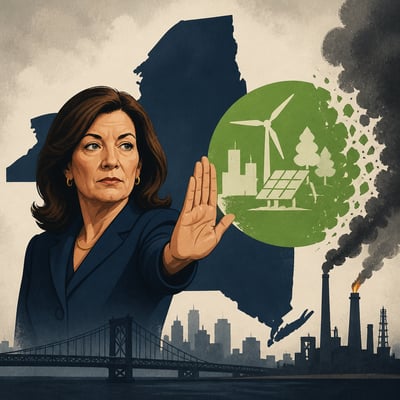
New York Governor Kathy Hochul has pushed changes to the state’s 2019 climate law that delay emissions enforcement, move the 2030 reduction requirement to a 2040 target, postpone cap-and-invest, and revise methane accounting. Hochul frames the changes as necessary to limit utility-cost increases and account for economic and energy-market pressures, while environmental groups, scientists, and some legislators argue they weaken emissions progress and prolong exposure to fossil-fuel pollution. The dispute also reflects New York’s difficulty cutting emissions from buildings, electricity generation, and transportation while maintaining affordability and grid reliability.
First Article: 01/31/26
Latest Article: 07/03/26
Summary
- The state is shifting the Climate Act’s 40 percent emissions-reduction goal from 2030 to a 60 percent target for 2040, with the long-term 2050 goal generally retained.
- Implementation of emissions regulations and the cap-and-invest program has been delayed, reducing near-term financial incentives for polluters to cut emissions.
- Hochul’s administration argues that meeting the original schedule could increase utility bills amid inflation, energy-price volatility, and federal opposition to renewable projects.
- The proposed methane-accounting change would move from a 20-year to a 100-year warming framework, placing less weight on methane’s near-term effects.
- Buildings, electricity generation, and transportation remain major obstacles, with natural gas supplying about half of New York’s electricity and serving much of its building-heating demand.
- Environmental justice advocates say delays would extend exposure to pollution near power plants, highways, and other fossil-fuel infrastructure.
- Critics and supporters disagree over whether fossil-fuel dependence or climate-policy compliance is the larger driver of household energy costs.
History
The biggest change is a reframing of Hochul’s climate rollback as not just an affordability move, but a response to broader economic and energy-market pressures. The current version also adds more concrete implementation context by highlighting the delayed enforcement of emissions rules and the continuing role of New York State Energy Research and Development Authority in the cost debate.
The story has become more concrete: Hochul’s revisions now include specific delayed targets and implementation timelines, not just a general effort to soften near-term climate enforcement. The current version also sharpens the policy tradeoff by tying the delay more explicitly to utility-cost concerns, slower sector progress, and ongoing budget and litigation fights.
Featured
Timeline: 154 Days
Hover over any logo to see coverage summary, click for full article.