
 Climate
 Privacy
 Bob Dylan
 Drones
 Data Centers
 AI Governance
 2026 Maine Senate Race
New Zealand Forestry Rules Raise Risk
Coverage from The Conversation, Science Media Centre, and others
Articles
4
Active Days
76
The Topic
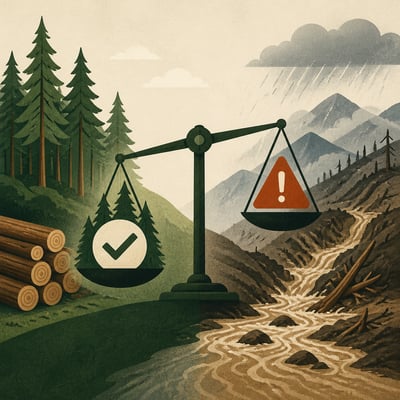
New Zealand’s amended commercial forestry rules are drawing concern that narrower national standards, greater reliance on risk-based and industry-led assessments, and limits on council powers may not adequately reduce slash, sediment and erosion risks during severe storms. Research from Tairāwhiti indicates that forestry consent decisions have generally not adopted stronger safeguards for high-risk headwaters and gullies, despite lessons from Cyclone Gabrielle. A related strand of climate governance research finds that disclosure requirements may improve consistency but can also encourage cautious communication without translating climate analysis into lending, investment or operational decisions.
First Article: 05/08/26
Latest Article: 07/22/26
Summary
- Amended national forestry standards narrow the circumstances in which councils can impose stronger local safeguards.
- A Tairāwhiti review found only one of six forestry consent applications partially limited harvest area, with no consistent exclusions for high-risk headwaters or gullies.
- Cyclone Gabrielle exposed how forestry debris can damage waterways, infrastructure, farms, ecosystems and downstream communities.
- A plan stop prevents councils from changing relevant planning rules until the end of 2027, potentially delaying local risk controls.
- Critics say risk-based and industry-led slash assessments provide limited scope for independent geotechnical scrutiny.
- New Zealand’s climate disclosure framework may produce cautious public communication if assurance and greenwashing concerns outweigh practical use of climate analysis.
History
The story now adds more specific evidence that the tightened forestry framework is still not producing stronger protections in practice, especially in Tairāwhiti, while also broadening to a related climate-disclosure issue where compliance may not translate into real decision-making change.
Featured
Timeline: 76 Days
Hover over any logo to see coverage summary, click for full article.