
 Climate
 Privacy
 Bob Dylan
 Drones
 Data Centers
 AI Governance
 2026 Maine Senate Race
New Zealand Faces Stronger Climate Extremes
Coverage from The Conversation, ScienceDaily, and others
Articles
6
Active Days
773
The Topic
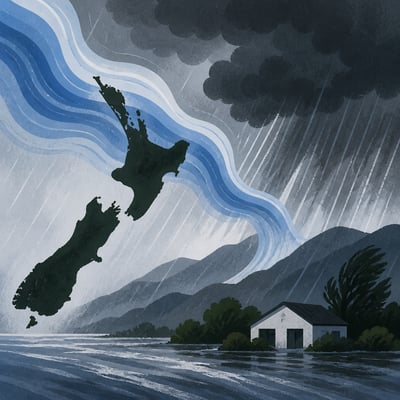
Research indicates that warming is likely to amplify several climate hazards affecting New Zealand, including heavier and more frequent extreme rainfall, more severe drought conditions, and greater household heat exposure. Atmospheric rivers and intensifying Southern Ocean storms may contribute to stronger rainfall extremes, while hotter summers could increase health risks and shift electricity demand toward cooling. The findings point to growing needs for flood planning, drought preparedness, heat-resilient homes, and energy-system adaptation, although regional effects vary by location and emissions pathway.
First Article: 05/21/24
Latest Article: 07/02/26
Summary
- Extreme one-day and three-day rainfall events are projected to become more intense and frequent across much of New Zealand, with the largest increases in the central North Island and parts of the South Island’s west coast.
- Under a moderate warming pathway, about half of the locations studied could see at least a 50% increase in impactful rainfall events by late century, while some could experience doubling or tripling.
- Historical droughts before 1950 were more severe than many events within living memory, suggesting that modern records alone may understate New Zealand’s drought risk.
- Higher temperatures are expected to increase household overheating and heat-related deaths, with lower-income households, older people, renters, and other vulnerable groups facing greater exposure.
- Wider use of heat pumps could reduce overheating and health impacts but would also raise summer electricity demand and system costs.
- Atmospheric rivers are projected to carry more moisture and higher-category events could become more than twice as frequent, while stronger Southern Ocean storms are already associated with increased rainfall near Macquarie Island.
History
The story is now more specific about heat impacts and adaptation, adding evidence that wider heat-pump use could reduce overheating but raise summer electricity demand. It also sharpens the rainfall outlook with a clearer estimate of how many locations may face much more frequent impactful events under a moderate warming pathway.
The update mainly refines the climate-risk framing rather than changing the underlying story: drought risk is now tied more explicitly to instrumental records, and rainfall impacts are more clearly linked to stronger atmospheric rivers and Southern Ocean storm changes. It also shifts the emphasis toward adaptation needs for flood, water, health and infrastructure planning.
Featured
Timeline: 773 Days
Hover over any logo to see coverage summary, click for full article.