
 Climate
 Privacy
 Bob Dylan
 Drones
 Data Centers
 AI Governance
 2026 Maine Senate Race
Carbon Capture Moves Toward Live Control
Coverage from ScienceDirect, World Cement, and others
Articles
5
Active Days
143
The Topic
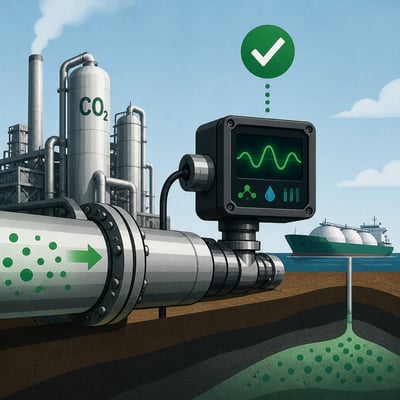
Carbon-capture development is increasingly focused on compact systems that can operate in constrained settings and on real-time measurement to verify performance and control CO2 quality. Demonstrations span shipboard capture, automotive exhaust, membrane modules, and industrial CCUS monitoring, with reported progress in capture performance, modularity, and inline verification. The evidence points to measurement and process control becoming important alongside the capture equipment itself, while larger-scale operating performance and long-term economics remain under validation.
First Article: 02/18/26
Latest Article: 07/10/26
Summary
- Pilot systems are testing compact capture configurations for ships and other space-constrained applications.
- Membrane, zeolite adsorption, and solvent-based systems are being validated across different exhaust and industrial conditions.
- Mazda reported a more than ninefold increase in CO2 captured during its second onboard racing demonstration, reaching 804 grams over 24 hours.
- Cool Planet and Hereon reported pilot measurements within 1% of model predictions for a modular membrane system.
- Inline Raman, FTIR, laser, and chromatographic analysis are being used to detect CO2 composition and impurities continuously.
- CO2 purity monitoring is tied to pipeline protection, storage requirements, compliance, and operational reliability.
- Reported demonstrations remain limited in duration or scale, and several systems still require validation under variable real-world conditions.
History
The update sharpens the story by adding specific performance results and new monitoring tools, showing the capture effort moving from general demonstrations toward better-validated modular systems. It also underscores that real-world scale and durability remain unresolved.
The story has broadened from general CCUS monitoring to specific compact and mobile capture demonstrations, with new examples showing how real-time analysis is being integrated into shipboard, vehicle-based, membrane, and adsorption systems. This shifts the emphasis toward deployment constraints and end-to-end stream usability, not just measurement visibility.
Featured
Timeline: 143 Days
Hover over any logo to see coverage summary, click for full article.