

Last Update: 06/03/2026 at 5:25 AM EST
Residential Electrification Incentive Shift
Coverage from Reuters, Jasper Local, and others
Articles
15
Latest Article
05/29
Active Days
139
Executive Summary
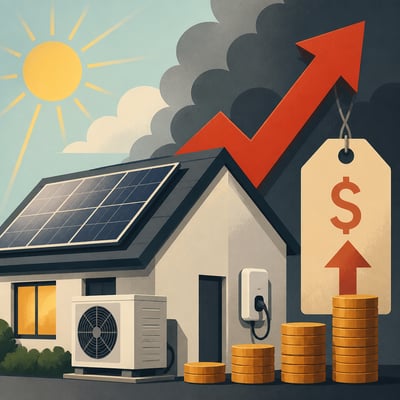
Residential electrification is entering a more expensive and uneven phase as federal solar and heat pump incentives expire, tariffs and domestic-content rules lift costs, and installers shift toward leases, subscriptions, and other financing models. In the UK, policy support is moving in the opposite direction, with new-home standards, plug-in solar rollout, and heat pump grants reinforcing adoption despite grid and tariff changes.
Key Points
- U.S. residential solar and heat pump demand is being pressured by the end of federal tax credits and by tariffs and domestic manufacturing requirements that raise upfront costs.
- Installers and marketplaces are adapting with lease-to-own, prepaid lease, subscription, and third-party ownership models to preserve affordability and access to tax benefits.
- Heat pump price effects appear more modest than for solar because many units never qualified for the federal credit, but imported components and tariffs still lift costs.
- The rooftop solar installation sector is seeing layoffs, restructurings, and slower installations as homeowner incentives disappear and payback periods lengthen.
- UK policy is still supportive of household electrification, with the Future Homes Standard, heat pump grants, and planned plug-in solar expansion encouraging adoption.
- Electricity price volatility and utility-rate design remain important drivers, especially where solar, batteries, and heat pumps can reduce exposure to rising bills.
- State and provincial programs continue to matter, but rules around financing, eligibility, and system sizing create practical barriers for households.
Featured Article
US homeowners face higher costs in 2026 as federal tax credits end and tariffs raise prices for solar panels, batteries, and heat pumps.
Coverage Timeline: 139 Days
Hover over any logo to see coverage summary, click for full article.
Additional Articles
⭐⭐⭐⭐⭐
U.S. rooftop solar installers face 2026 market contraction after expiration of homeowner tax credit.
In 2026, a Jasper, Alberta homeowner outlines how Alberta's CEIP financing and solar micro-generation rules affect planning rooftop systems and potential heat pump upgrades.
In the United States, federal EV tax credit phaseout ended in September 2025, and EV spending fell sharply through late 2025 per Clean Investment Monitor data.
In 2026, U.S. industry representatives explain that the expiration of federal heat pump tax credits and ongoing tariffs will slightly increase residential system costs nationwide.
⭐⭐⭐
The UK government plans Future Homes Standard rules for heat pumps and onsite solar, plus discounted windy-day bills in Scotland and the East of England to reduce wind curtailment.
U.S. homeowners face higher electrification costs in 2026 as federal solar, battery, and heat-pump tax credits expire and domestic-content rules take effect nationwide.
Canada forecasts 2026 to be among the hottest years on record, with government clean energy investments and emissions policies.
In the UK during Q2 2026, analysts anticipate the Ofgem price cap will rise after April's 1641 baseline, affecting household solar, battery, and heat pump adoption.
State legislatures and utility regulators in 2025 expanded heat pump grants, geothermal networks, and VPP pilots to accelerate electrification and grid flexibility.
⭐️⭐️
UK home buyers are willing to pay more for solar panels and heat pumps as the Future Homes Standard moves toward 2027.
In 2026, the removal of heat pump tax credits and new tariffs are expected to raise heat pump prices in the United States.
U.S. policy changes in 2026 raise costs for residential electrification nationwide.
MarketBeat identifies five solar stocks to watch on February 1 2026, highlighting incentives and costs as drivers across the United States, France, Japan, and Chile.
Baltimore residents faced rising utility bills in 2025 due to policy changes and aging infrastructure in the Mid-Atlantic region.