
 Climate
 Privacy
 Bob Dylan
 Drones
 Data Centers
 AI Governance
 2026 Maine Senate Race
Climate-Intensified Floods Expose Urban Vulnerability
Coverage from The Guardian, Climate Home News, and others
Articles
8
Active Days
231
The Topic
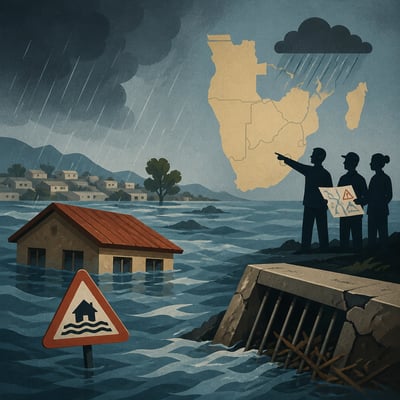
Extreme rainfall and flooding across West and Southern Africa are causing deaths, displacement, infrastructure damage, and repeated disruption. Attribution studies indicate that human-caused warming has increased the intensity or likelihood of several recent events, while dense settlement in flood-prone areas, inadequate drainage, weak planning, and limited evacuation capacity have magnified the consequences. The pattern is increasing pressure for locally designed adaptation, safer housing, stronger warning systems, and greater international support for affected communities.
First Article: 12/04/25
Latest Article: 07/22/26
Summary
- Attribution studies link recent floods in West and Southern Africa to stronger or more likely extreme rainfall under human-caused warming.
- Coastal cities and rapidly growing settlements face heightened exposure where homes and infrastructure occupy floodplains, wetlands, riverbanks, and unstable slopes.
- Warnings often reach communities, but evacuation plans, public trust, drainage, bridges, and local response capacity remain inadequate.
- Floods are producing deaths, displacement, damaged homes and transport links, contaminated water, health risks, and disrupted livelihoods.
- Authorities are considering demolitions and relocations, but experts warn that moves without affordable housing, services, compensation, and community participation can shift rather than reduce vulnerability.
- Adaptation finance and loss-and-damage resources remain insufficient relative to identified needs.
History
The story now places stronger emphasis on attribution-backed evidence for recent floods across West and Southern Africa, while shifting away from the Sri Lanka compound-flood example. It also adds more concrete detail on the human consequences and on the limits of relocation unless it is paired with housing, services, and community participation.
The story broadens from Africa-focused flooding impacts to a wider, more operational framing that now includes Sri Lanka and compound flood risk. It also sharpens the response agenda, emphasizing failure to act on warnings, safer housing, flood mapping, and funding pressures on lower-emitting countries.
Featured
Timeline: 231 Days
Hover over any logo to see coverage summary, click for full article.