
 Climate
 Privacy
 Bob Dylan
 Drones
 Data Centers
 AI Governance
 2026 Maine Senate Race
Climate Raises Southern California Landslide Risk
Coverage from Stanford Doerr School of Sustainability, Yale Climate Connections, and others
Articles
5
Active Days
94
The Topic
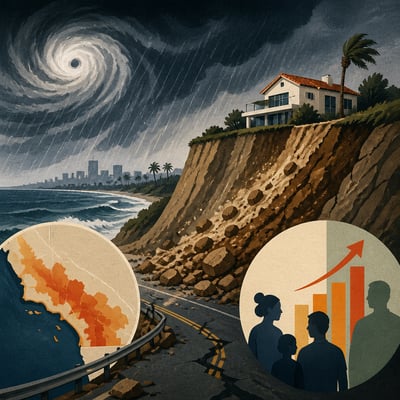
Warming oceans, heavier rainfall, wildfire impacts and unstable terrain are increasing concern about landslides in Southern California. Research projects more frequent extreme rainfall from rare tropical cyclones and expanding landslide exposure across the region, with low-income households facing a disproportionate share of the risk. Palos Verdes illustrates the practical challenge of choosing between continued stabilization, public investment, buyouts and retreat in areas already vulnerable to movement.
First Article: 04/06/26
Latest Article: 07/08/26
Summary
- Climate models project more frequent extreme rainfall from rare Eastern Pacific tropical cyclones affecting Southern California.
- Landslide-exposed area is projected to increase across all Southern California counties between 2000 and 2050.
- Low-income households are already more exposed to landslide-prone areas, and that disparity is expected to widen.
- Wildfires can remove vegetation and weaken slopes before later heavy rain triggers debris flows and landslides.
- Palos Verdes is experiencing worsening movement, damaged homes and utility disruptions after repeated heavy storms.
- El Niño and unusually warm Eastern Pacific waters may increase the likelihood of rare tropical cyclone rainfall impacts, although event probabilities remain uncertain.
- Local responses include forecasting, zoning, home protection, stabilization spending, buyouts and possible managed retreat.
History
The story broadens from a landslide-risk projection into a wider risk-management picture that adds wildfire-driven slope instability and more explicit adaptation tradeoffs. Palos Verdes is now framed less as a chronic damage case and more as a live choice among stabilization, buyouts and retreat.
Featured
Timeline: 94 Days
Hover over any logo to see coverage summary, click for full article.