
 Climate
 Privacy
 Bob Dylan
 Drones
 Data Centers
 AI Governance
 2026 Maine Senate Race
Heavier Storms, Sharper Droughts
Coverage from Inside Climate News, Scientific American, and others
Articles
24
Active Days
156
The Topic
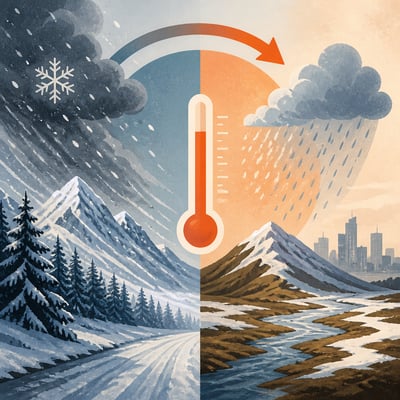
Climate change is altering when and how precipitation arrives, with more water falling in intense storms and longer dry periods between events. This can increase flooding and runoff while reducing soil moisture, groundwater recharge, snowpack, and dependable water supplies, allowing severe drought and heavy rainfall to occur in the same regions. The pattern is prompting reassessment of water management, infrastructure standards, forecasting, and emergency planning.
First Article: 01/26/26
Latest Article: 06/30/26
Summary
- Heavier, more concentrated rainfall can exceed soil absorption capacity, increasing runoff while reducing water retained in landscapes.
- Longer gaps between storms and faster evaporation are worsening drought conditions even where annual precipitation totals remain stable or increase.
- The U.S. West, including the Rocky Mountains and Colorado River basin, is a prominent hotspot for precipitation concentration and water-supply stress.
- Storm activity is intensifying beyond winter, including stronger or more frequent spring and autumn storms in the North Atlantic, North Pacific, and Arctic.
- Recent flooding and drought in Vermont illustrate how high precipitation variability can produce both damaging floods and rapid-onset water shortages.
- Historical infrastructure, forecasting models, and emergency plans may not reflect the changing timing and intensity of precipitation.
History
The story broadens from a general warning about precipitation changing to a more specific framing of hydrological volatility, adding new geographic emphasis on the Amazon and explicitly identifying updated forecasting and emergency-management needs. It also introduces new actors and institutions, including the University of Gothenburg and the National Weather Service, while sharpening the link between precipitation timing, evaporation, and water shortages.
The framing has broadened from general shifts in storm timing and flood/drought risk to a more specific claim that precipitation patterns are undermining reliability of water systems, infrastructure standards, and emergency planning based on historical norms. The regional focus also now emphasizes the northeastern and eastern U.S. alongside high-latitude storm changes.
Featured
Timeline: 156 Days
Hover over any logo to see coverage summary, click for full article.